FreeCell vs. Solitaire: Rules, Strategies, and Difficulty Compared
March 17, 2026
Written By SolitaireStreak
Both FreeCell Solitaire and Klondike Solitaire use a standard 52-card deck and require you to complete four foundation piles, building them in ascending order from Ace to King by suit. They also sequence tableau cards the same way—descending order, alternating color—but their different game mechanics create completely unique experiences.
FreeCell emphasizes planning and logic with all cards visible from the start, while Klondike balances strategy with chance through hidden tableau cards and stock cycling.
FreeCell vs. Solitaire at a Glance
Understanding these differences helps you choose the right game for your mood. Below, we’ll break down the rules, strategies, and decision criteria to help you pick your perfect match.
Aspect
FreeCell
Klondike Solitaire
Objective
Complete all four foundation piles
Complete all four foundation piles
Difficulty
High skill, low luck
Moderate skill, moderate luck
Setup
8 columns, all cards visible, no stockpile, four free cells
7 columns, 21 cards hidden, stockpile that can be cycled through an unlimited number of times
Card sequencing
Descending order, alternating color
Descending order, alternating color
Sequence movement
Free cells + empty columns determine how many cards you can move at a time
Move individual cards or sequences of any length
Empty columns
Filled with any card or legal sequence
Only Kings or King sequences can start new columns
Strategy focus
Sequence planning and free cell management
Stock timing and tableau building
Best for
Players who enjoy logic puzzles and planning
Players who enjoy faster games and chance
FreeCell Shows Every Card While Klondike Hides Most of the Tableau
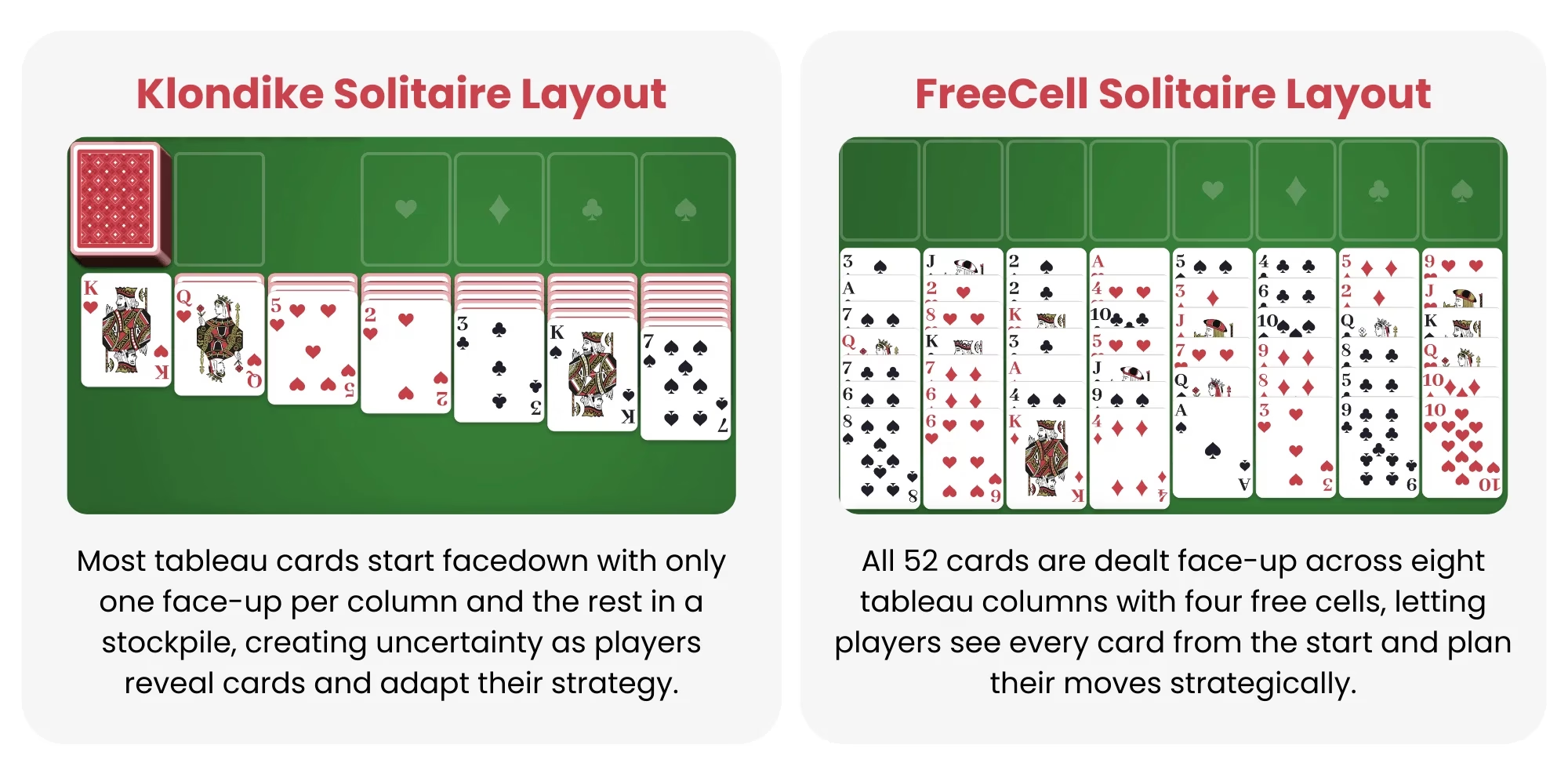
The way each game is dealt shapes the gameplay and strategies. Each game has unique starting layouts.
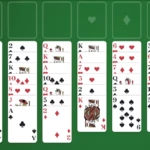
In FreeCell, all 52 cards are dealt face-up across eight tableau columns, along with four free cells that temporarily hold cards. Because every card is visible from the start, players can immediately see where important cards, like Aces or low cards, are located and make a plan to access them.
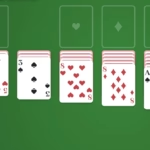
In Klondike Solitaire, most tableau cards begin face-down. Each column has only one face-up card, with the rest hidden underneath. The remaining cards form a stockpile that players draw from during the game.
FreeCell Rewards Planning While Klondike Introduces Uncertainty
Because of these varied layouts, the two games emphasize different skills.
In FreeCell, the fully visible tableau means players can plan long sequences of moves and carefully manage the four free cells to reorganize cards. Nearly all deals are solvable with perfect play, making strategy the most important factor.
Klondike introduces more uncertainty. Hidden tableau cards and the stockpile mean players often make moves without knowing what will be revealed next. As a result, Classic Solitaire combines strategy with luck, and even strong players lose some games when key cards remain buried.
Both Games Build Sequences the Same Way
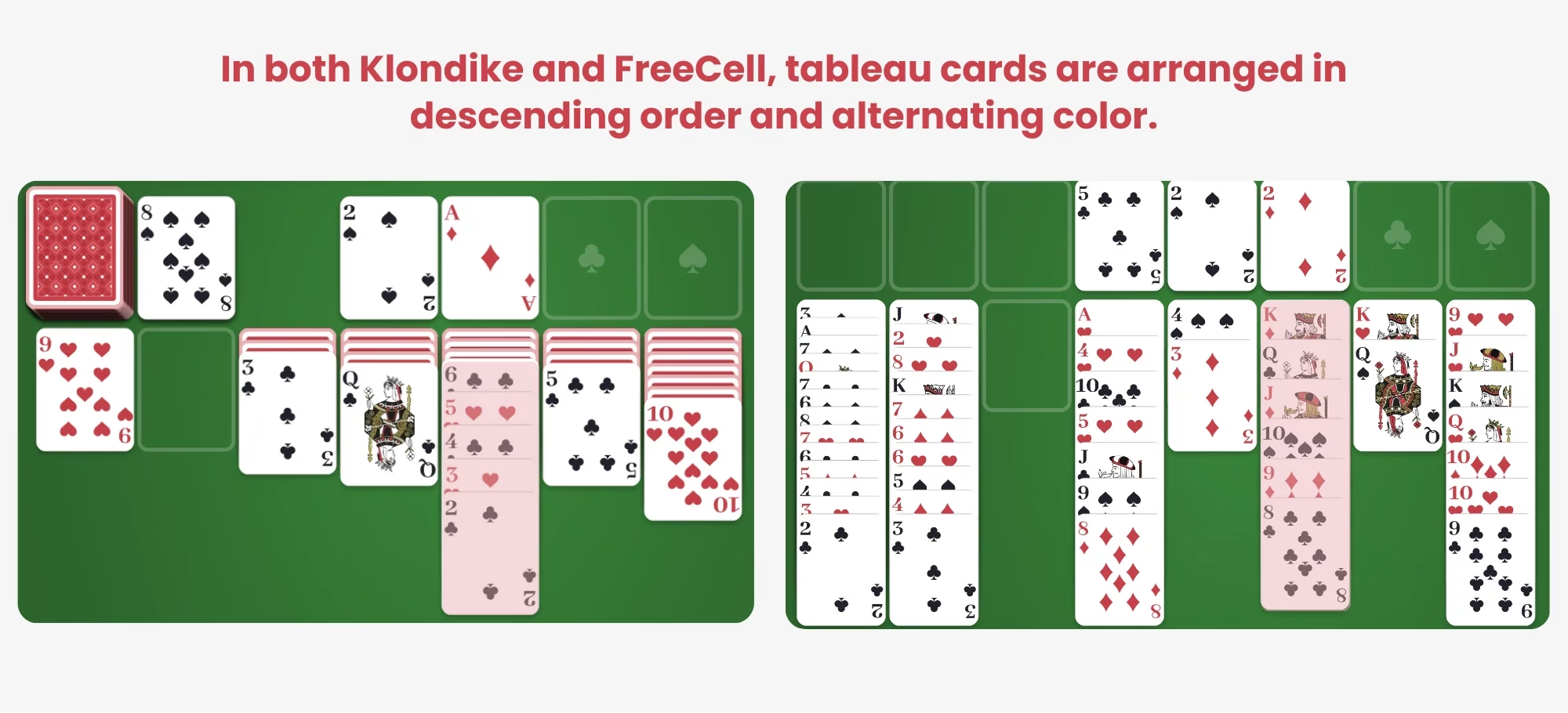
Even though the games feel different, the core tableau rule is identical. Cards must be placed in descending order with alternating colors.
Examples include: 8♠ → 7♥ → 6♣ and 10♦ → 9♠ → 8♥
In both games, sequencing cards in the tableau helps reveal buried cards or free important cards for the foundation piles.
FreeCell Limits How Many Cards You Can Move at Once
The biggest mechanical difference between the games involves sequence movement.
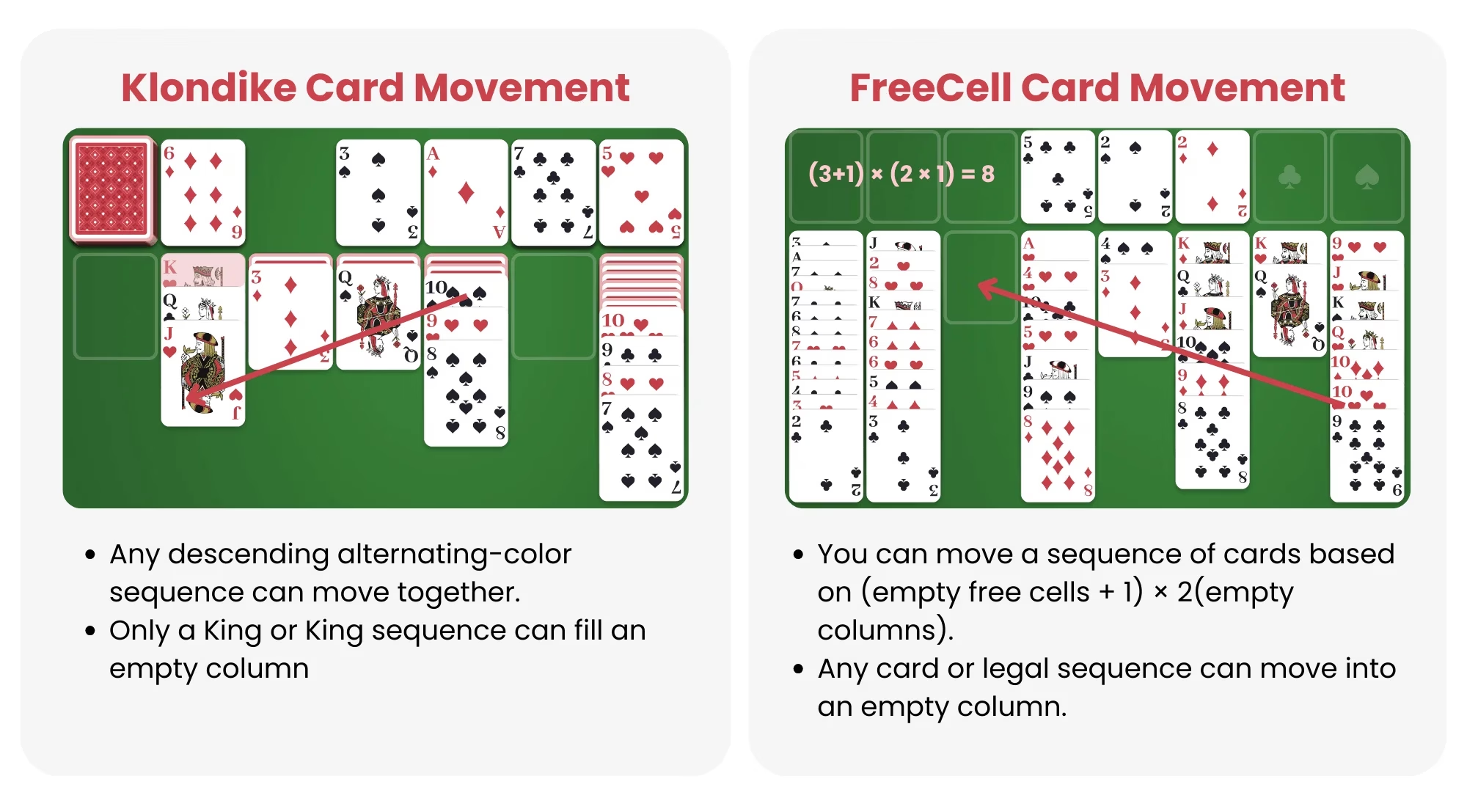
In FreeCell, the number of cards you can move in a sequence depends on your available free cells and empty columns. The move capacity formula is: (Empty free cells + 1) × 2(empty columns). For example, with two free cells and one empty column, you can move a sequence of six cards as long as you aren’t moving cards into the empty column. Managing these resources carefully is the heart of FreeCell strategy.
In Klondike, any properly ordered sequence can move together as a unit regardless of length. If a stack follows the descending alternating-color rule, the entire sequence can be moved to another column. This freedom simplifies movement, but is balanced by hidden cards and stock pile uncertainty.
FreeCell Allows Any Card to Move Into an Empty Column, While Klondike Requires a King
Empty tableau columns behave very differently in the two games.
FreeCell allows any card or legal sequence to be placed in an empty column. This flexibility helps you rearrange the tableau and uncover important cards.
Klondike only lets you place a King or King sequence in an empty column. This rule limits your flexibility and makes empty columns valuable but situational tools. Players often wait until a King becomes available before clearing a column.
FreeCell Strategy Centers on Planning Sequences, While Klondike is About Uncovering Cards
Because of their different mechanics, each game requires a different strategic mindset.
FreeCell: Since all cards are visible, FreeCell players plan several moves ahead before touching the tableau. Essential strategies include:
Identifying and freeing Aces early in the game
Keeping free cells open whenever possible
Clearing columns to help with tableau organization and sequence movement.
Delaying foundation moves when the cards are needed to create sequences in the tableau
Calculating move capacity before moving large stacks
Klondike: Since cards are hidden in tableau columns and the stockpile, Klondike players must focus on revealing hidden cards and time stockpile moves. Key strategies include:
Making moves that flip face-down cards
Moving cards from long tableau piles first
Waiting to move stock cards to the tableau unless they create additional moves
Delaying foundation moves that block tableau play
Avoiding emptying columns unless you have a King available
You don’t have to pick just one game, but understanding each game’s traits can help you decide which fits your current mood.
Klondike, especially Turn 3, generally has a lower win rate than FreeCell. In Klondike Solitaire, many cards are hidden and the game depends heavily on luck—especially in Turn 3, where you must carefully time when certain cards appear in the waste pile to use them effectively. In contrast, FreeCell reveals almost all cards from the start, so players can plan ahead and rely more on strategy.
Choose FreeCellif you want skill-based outcomes and enjoy planning ahead. Because all the cards are visible from the start, nearly 99% of FreeCell deals are solvable with perfect play, so losses usually come from planning mistakes rather than bad luck. This makes it ideal when you want a mental workout with predictable results.
Choose Klondike Turn 1 if you want balanced skill and luck with quicker games. About 80%+ of deals are solvable, giving you better odds than Turn 3 while still requiring strategic thinking about hidden cards and stock management. Games typically finish faster than FreeCell.
Choose Klondike Turn 3if you want a strategic challenge with limited information. The difficulty comes from managing the three-card draw and planning around buried cards in the stock. This variant rewards patience and card counting skills.
Improve Your Game With SolitaireStreak
SolitaireStreak lets you play FreeCell, Klondike, and other Solitaire games online for free. Practice with winnable deals and use the hint feature when you get stuck. If you create an account, you can even track your statistics and see your win rate improve as your skills grow.