How to Play Spider Solitaire: Setup, Rules, and Tips to Win
February 5, 2026
Written By SolitaireStreak
Spider Solitaire is different from other types of Solitaire because you have to build complete same-suit sequences from King down to Ace in the tableau before moving the group to a foundation pile. This, plus the fact that you use 104 cards, meaning eight foundation piles, makes Spider Solitaire a long and strategic game.
The difficulty scales based on how many suits are in play, so it’s a good version for beginners and advanced players alike. The three Spider Solitaire variants are:
1-Suit Spider Solitaire: All cards use the same suit. This is the easiest version of Spider Solitaire and ideal for learning sequencing and uncovering cards.
2-Suit Spider Solitaire: Cards use two suits, usually hearts and spades or clubs and diamonds. This adds complexity because you must manage suit separation while building sequences.
4-Suit Spider Solitaire: All four suits are used. This is extremely challenging and requires careful planning to avoid dead ends.
Before diving into the details of gameplay, here’s a quick overview of how Spider Solitaire works.
Goal: Complete all eight foundation piles by building same-suit King-to-Ace sequences, moving them to the foundations as they are completed.
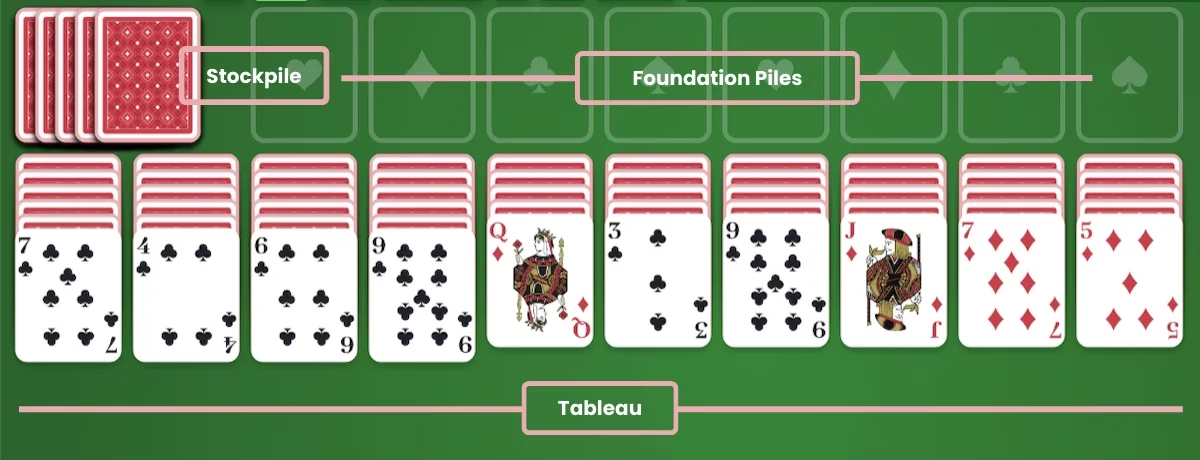
Setup: Deal 54 cards into 10 tableau columns (six cards in the first four columns and five cards in the remaining six columns) and place 50 cards in the stockpile.
Tableau organization: You can sequence cards in descending order regardless of suit, but only same-suit sequences can be cleared.
Spider Solitaire Objective
Win Spider Solitaire by building same-suit King-to-Ace sequences in the tableau and removing each completed sequence to its foundation until all eight foundation piles are filled. The game ends in defeat if you can’t make any more moves and there are still cards left in the tableau.
Setting Up Spider Solitaire
Spider Solitaire uses 104 playing cards, typically from two standard decks. When playing with physical decks of cards, you won’t have the right number of each suit unless you’re playing 4-Suit, so follow these guidelines. In 1-Suit Spider Solitaire, treat all cards as the same suit by building sequences in descending order regardless of suit or color. In 2-Suit Spider Solitaire, treat same-colored cards as the same suit.
When playing Spider Solitaire on SolitaireStreak, the suits are standardized for clarity: the 1-Suit version uses clubs, the 2-Suit version uses clubs and diamonds, and the 4-Suit version uses all four suits.
The layout stays the same across all difficulty levels.
Deal 54 cards into 10 tableau columns. The first four columns receive six cards each and the remaining six columns receive five cards each. Only the last card in each column is face up.
Create the stockpile with 50 cards. Place it to the top-left of the tableau. When you use a stockpile, a new card is dealt to the bottom of each tableau column, so you can only use it five times.
Leave space for eight foundation piles. When a full same-suit sequence is formed in the tableau, it is automatically moved to a foundation pile.
How to Play Spider Solitaire
Spider Solitaire is about organizing chaos. You will spend the game rearranging cards to uncover hidden ones and build clean sequences. During play, follow these rules:
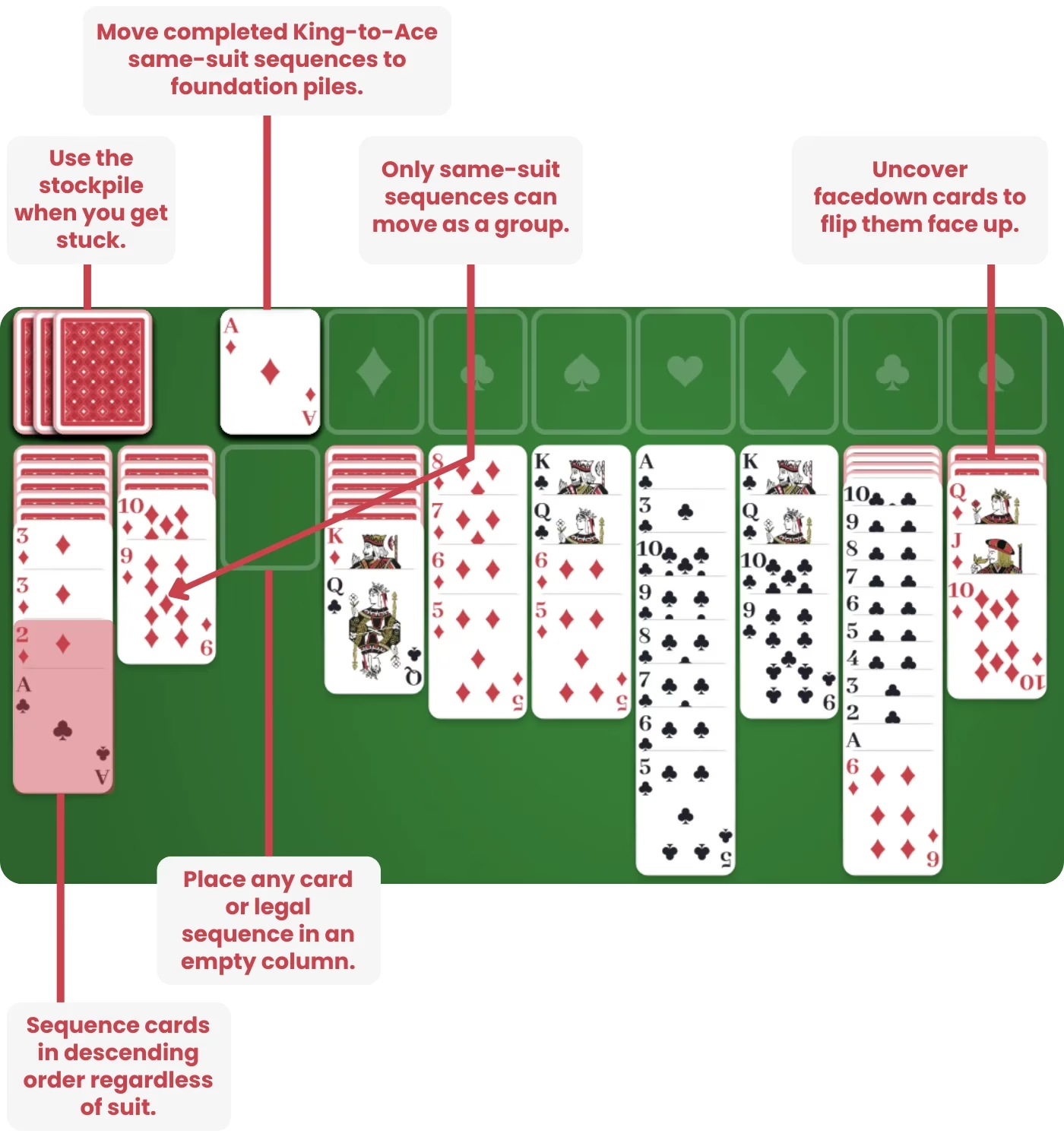
Sequence cards in descending order. You can place any card onto another card that is one rank higher, regardless of suit. For example, a 9 can be placed on a 10 of any suit.
Move only same-suit sequences as a group. You may move a sequence of cards as a unit if they are in descending order and all the same suit. Mixed-suit sequences must be moved one card at a time. So a 7♣-6♣-5♣ could be moved together but a 7♣-6♥-5♣ could not.
Uncover facedown cards to flip them face up. When the last face-up card in a column is moved, the card beneath it flips face up and becomes playable.
Place any card or legal sequence in an empty column. You may also choose to leave columns empty to help with reorganization.
Deal from the stockpile only when necessary and no more than five times. When no moves remain, or when you’ve decided not to make a mixed-suit move for strategic reasons, deal one face-up card to each tableau column. You may deal only if every column contains at least one card.
Complete same-suit sequences in the tableau. When you successfully build a full sequence from King down to Ace in the same suit, it is placed in a foundation pile.
Keep reorganizing cards until you’ve completed all eight foundation piles or are at a standstill.
Common Spider Solitaire Mistakes
Dealing from the stockpile before exhausting useful moves
Ignoring opportunities to expose facedown cards
Not leveraging empty columns
Excessively mixing suits and locking columns
Spider Solitaire Strategies That Win Games
Success in Spider Solitaire relies on strategies that help you think ahead and manage suits effectively. By uncovering hidden cards and completing sequences carefully, you can steadily work toward victory.
Prioritize exposing hidden cards, especially early in the game. Every face-up card gives you more options and helps you plan ahead. If too many cards remain facedown after using the stockpile multiple times, you risk running out of moves.
Create empty columns. Empty columns are powerful for reorganizing cards since any card or legal sequence can be placed in them. To create empty columns, focus on building down shorter tableau piles first. Once empty, strategically use them to untangle mixed-suits, build same-suit sequences, and reveal facedown cards.
Delay stockpile deals. Each stockpile deal adds complexity to the tableau. Evaluate all your options in the tableau before using the stockpile, and only deal when necessary.
Build same-suit sequences whenever possible. Only same-suit sequences can be moved as a unit, so prioritize same suits first. If you’re creating a mixed-suit sequence, weigh the gains it provides such as uncovering hidden cards, freeing up columns, or setting up future same-suit sequences.
Play Spider Solitaire on SolitaireStreak
Ready to practice Spider Solitaire? Play all three versions on SolitaireStreak with no downloads required. Use hints and winnable deals while learning and track stats like average moves and time to measure your progress. You can also explore other card games including Klondike, FreeCell, Pyramid, and TriPeaks, all in one place.