The concept of winning Klondike Solitaire is simple — move all the cards to the four foundation piles, which are separated by suit and ascend in rank from Ace to King. But achieving a winning streak requires more than just following the rules.
We’ll break down real-game examples and practical Solitaire strategies that show exactly how to reveal hidden cards, build foundation piles, and make moves that set you up for success, whether you’re playing Solitaire online or with a deck of cards
1. Prioritize revealing face-down cards.
Every face-down card in the tableau is required to complete the foundation piles. The more face-up cards you reveal, the more informed decisions you can make about building sequences and planning ahead.
When to use this strategy:
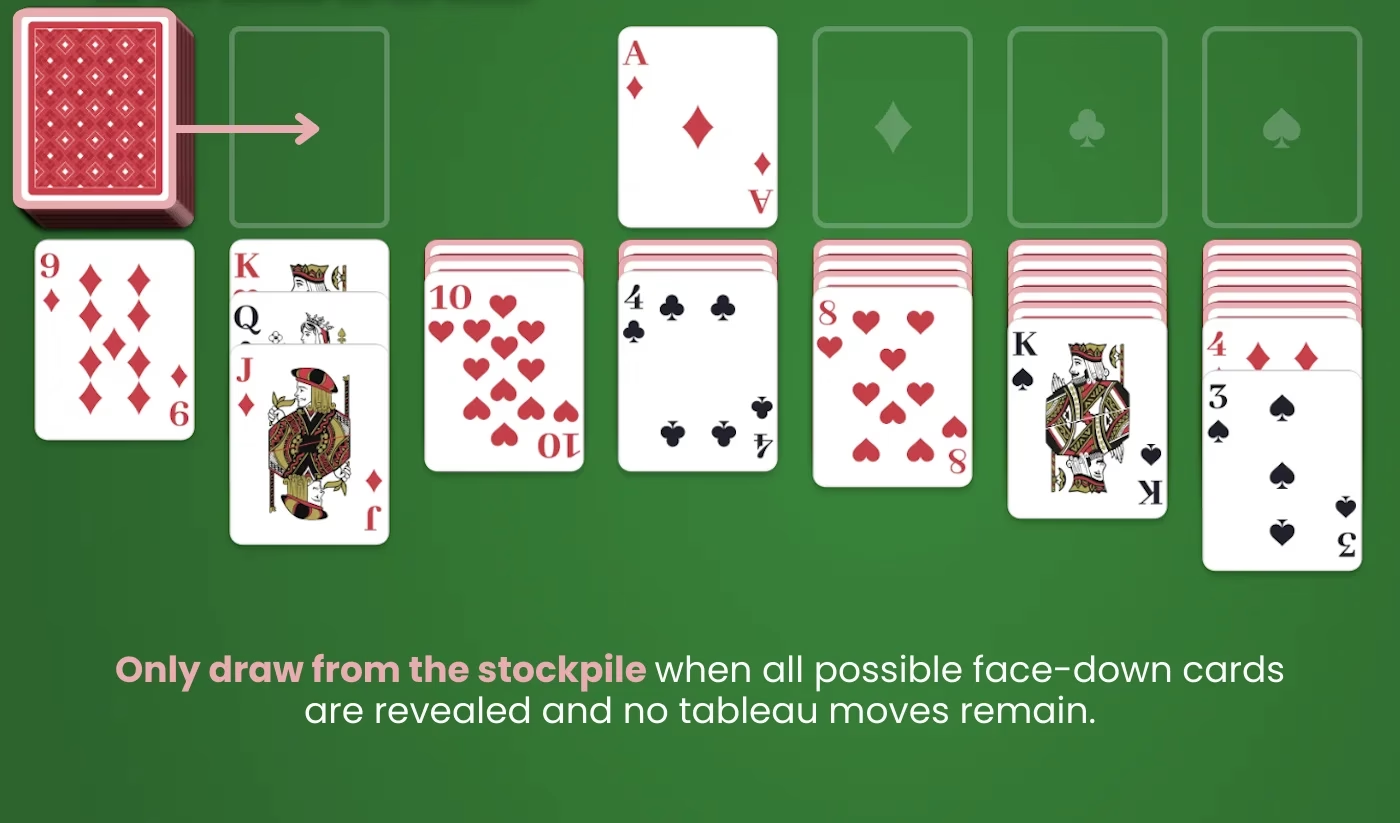
- At the start of the game, exhaust all your tableau moves before flipping a card from the stockpile to the waste pile.
- When you have a choice between moving a card from the waste pile to the tableau or moving a tableau card to another column or foundation, choose the move that uncovers a face-down card.
Example: All possible moves in the tableau are complete. Since there aren’t any more ways to reveal face-down cards, it’s time to flip a card from the stockpile to the waste pile to continue making moves.
2. Remove cards from longer tableau piles first.
The deeper cards are buried in a tableau column, the more difficult they are to access. Uncovering cards in these columns early in the game gives you more time to work with whatever you find and more opportunities to integrate those cards into your sequences before your options become limited.
When to use this strategy: When you have multiple cards of the same rank and color available to move, prioritize the one from the column with more hidden cards beneath it.
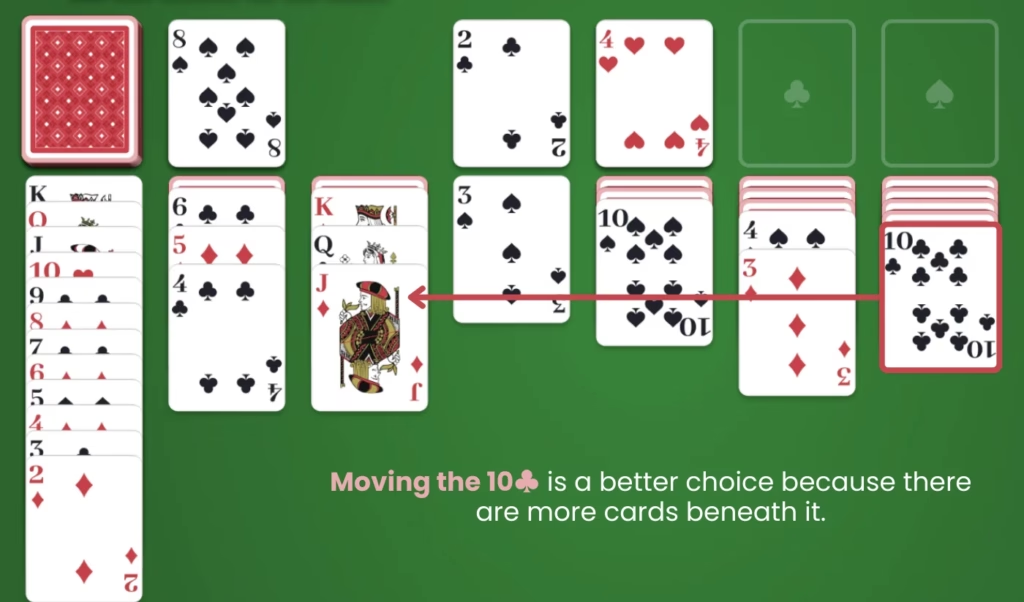
Example: Both black 10s are available to move. Move the 10♣ because there are more hidden cards beneath it.
3. Only use waste pile cards if they generate more moves in the tableau.
Playing a card from the waste pile to the tableau might seem productive, but it can actually block tableau moves later in the game if you don’t move cards wisely. Every waste pile card you move should open up new possibilities, not just fill a space.
When to use this strategy: Before moving a waste pile card to the tableau, ask yourself: “Will this move allow me to shift other cards and reveal face-down cards or move more cards to foundation piles?” If the answer is no, leave it in the waste pile for now.
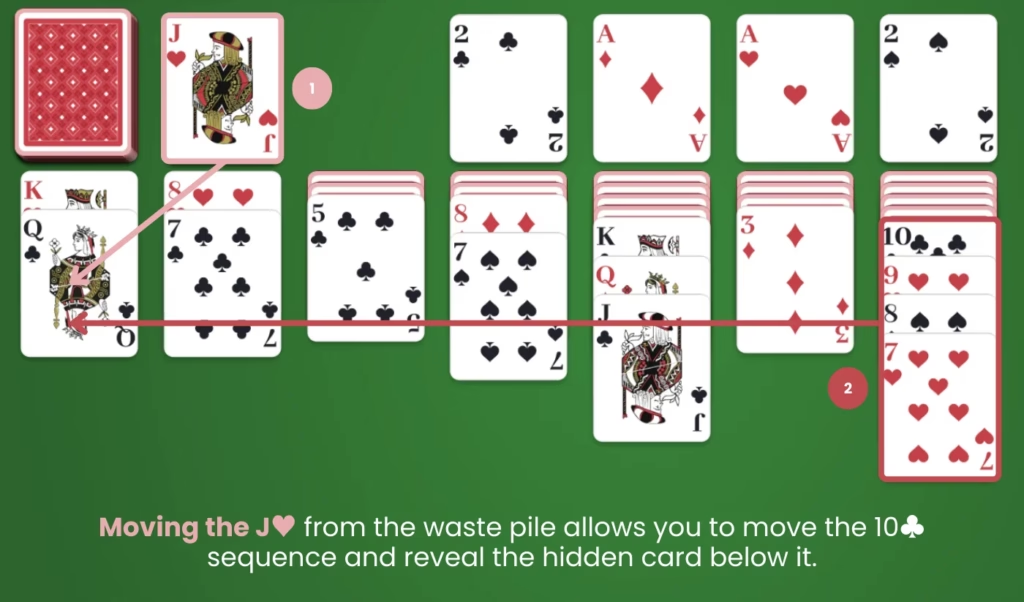
Example: Moving the J♥ to the Q♣ allows you to move the 10♣ sequence, revealing the card below it. This is especially helpful because there are many face-down cards in that column.
4. Don’t rush placing cards in the foundations.
It’s tempting to move cards to the foundation piles as soon as possible. After all, that’s how you win. But moving cards too quickly can trap valuable sequencing cards in the foundations, leaving you with fewer options in the tableau when you need them most.
When to use this strategy: Before moving any card to a foundation, consider whether you still need it for building sequences in the tableau. Pay special attention to keeping your red and black foundation piles balanced. If you build one color too far ahead of the other, you’ll limit your ability to create alternating color sequences in the tableau.
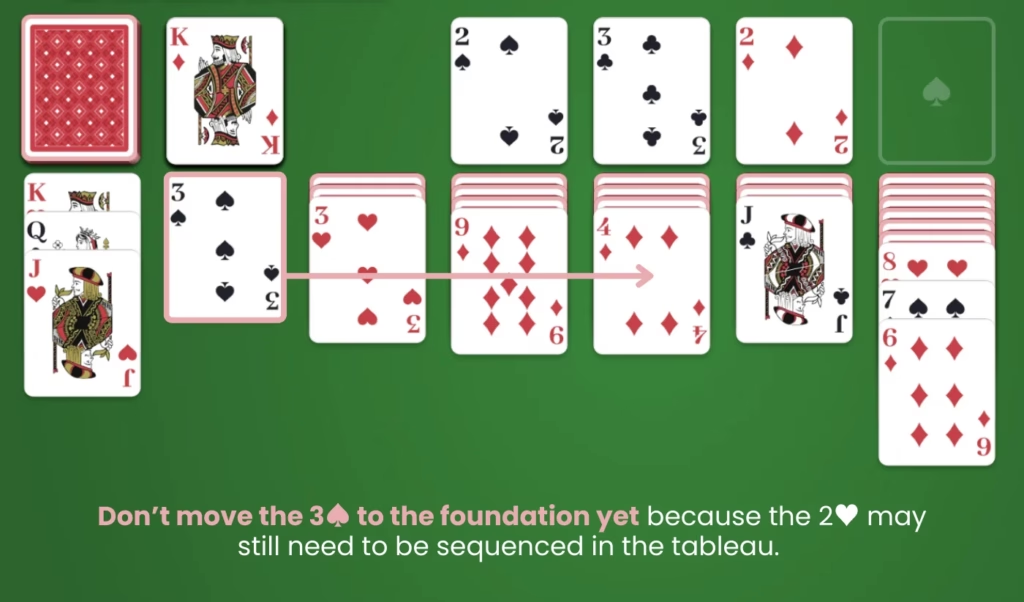
Example: You could move the 3♠ to the foundation, but the 2♥ is still hidden. If both black 3s are in the foundation piles, the 2♥ will have to go until the A♥ is revealed. Instead, place the 3♠ on the 4♦ and use a King to fill the free column.
5. Avoid emptying columns unless you can use them.
An empty column is one of the most valuable resources in Solitaire, but only if you have a King ready to move there. Clearing a column without a plan wastes your limited tableau space because there’s one less column to use for sequencing.
When to use this strategy: Only make moves that will empty a column if you have a King available (either in the tableau or waste pile) to immediately fill that space.
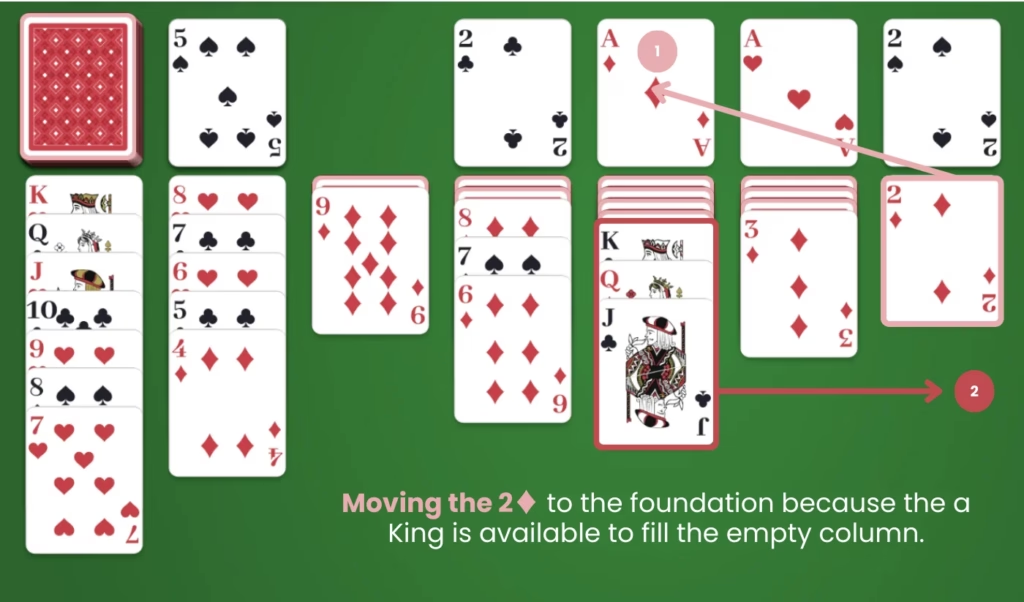
Example of when to empty a column: Move the 2♦ to the foundation (and subsequently the 3♦ and 4♦) because you can move the K♣ sequence, revealing the card below it.
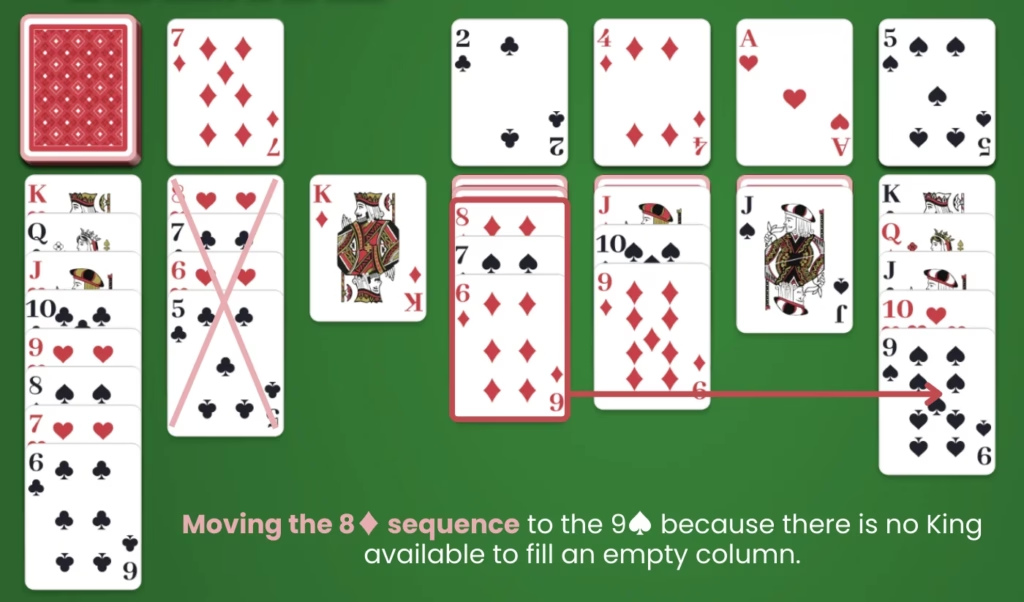
Example of when to not empty a column: In this instance, move the 8♦ sequence to the 9♠ instead of moving the 8♥ sequence to empty the column since you don’t have a King available and moving the 8♦ will reveal a card below it.
6. Be intentional when filling empty columns with Kings.
The King you choose to fill an empty column should maximize your ability to build sequences and reveal face-down cards. Think ahead when deciding if a black or red King is best.
When to use this strategy: When you have multiple Kings available (or both a red and black King in the stockpile), consider which color will create the most sequencing opportunities based on the cards currently visible in your tableau.
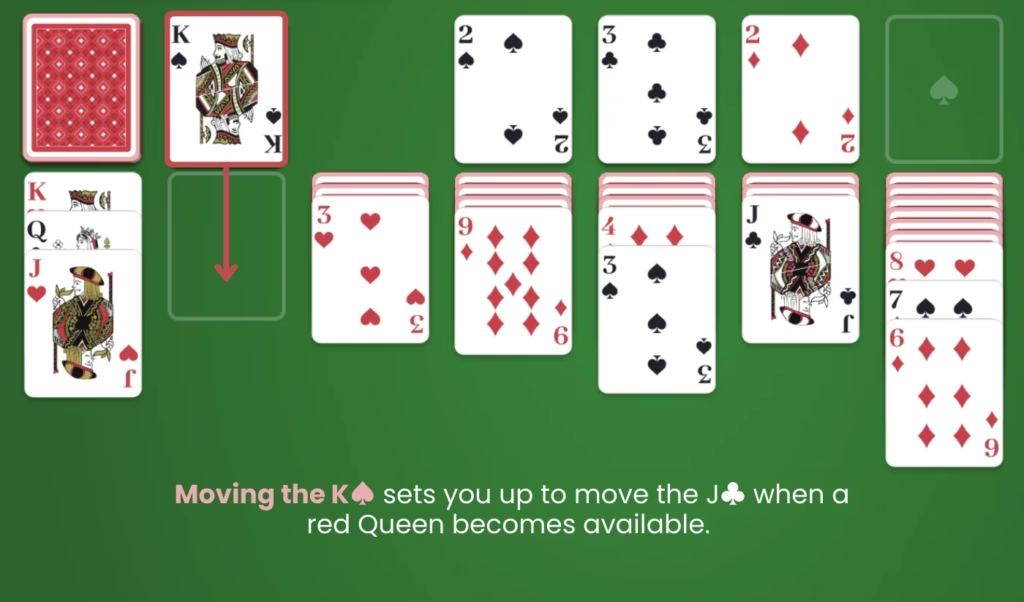
Example: There are both a red and black King available in the stockpile. Filling the empty space with the K♠ makes more sense because there is already a red King sequence in the tableau and a black Jack is available, so once a red Queen is revealed that card can be moved and the card underneath can be uncovered.
7. Observe the stockpile and deduce hidden cards.
Every card you see gives you information about what’s still hidden. By tracking which cards have appeared, you can make smarter decisions about which moves are safe and which ones might leave you stuck later.
When to use this strategy: Keep mental notes of key cards you’ve seen, especially pairs of the same rank and color.
- If you see both cards of the same rank and color (like both black Queens), you can play them into the tableau knowing you won’t uncover one later with nowhere to place it.
- If you’ve only seen one card of a rank and color, you know one is still hidden and should plan accordingly.
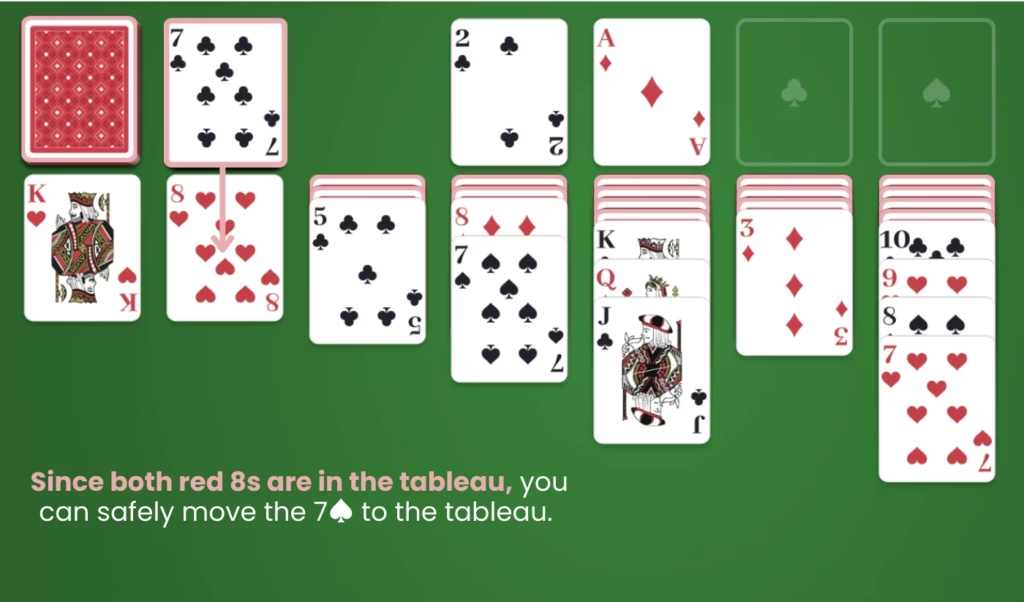
Example: Since both red 8s are in the tableau, you can move the 7♠ to the tableau knowing you won’t flip a face-down card later and have nowhere to move it.
8. Rearrange cards within the tableau to free cards for foundations.
Sometimes the card you need for a foundation pile is buried under a sequence in the tableau. By strategically rearranging sequences between columns, you can extract specific cards without losing your progress.
When to use this strategy: This strategy is more commonly used later in the game. When a card you need for a foundation is in the middle of a tableau sequence, look for opportunities to temporarily move the cards above it to another column, play the needed card to the foundation, then rebuild your sequence.
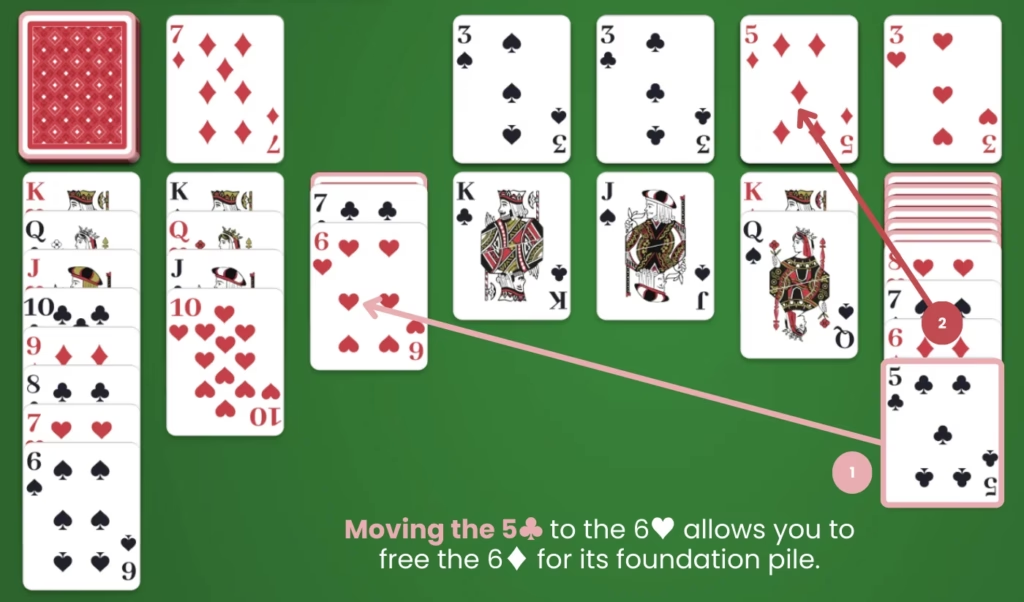
Example: Move the 5♣ to free the 6♦ for the foundation pile.
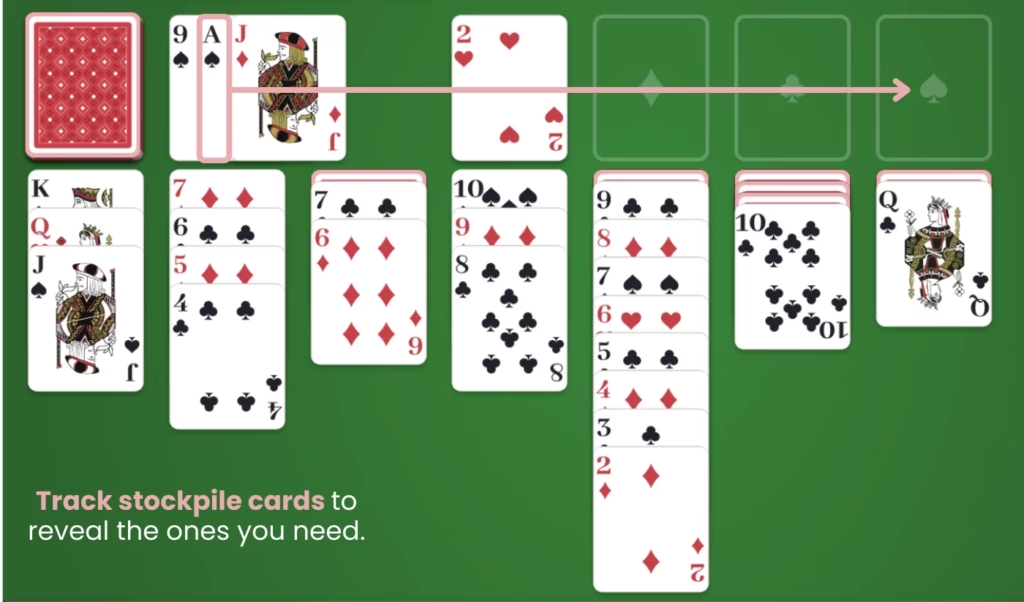
9. Track the stockpile cards carefully in Turn 3.
In Turn 3 Solitaire, you flip three cards from the stockpile to the waste pie at a time, which means card positioning matters. Playing or not playing certain cards determines which cards become accessible on your next pass through the stockpile. Understanding this pattern gives you control over which cards appear.
When to use this strategy: When your options become more limited, strategically reveal cards in the stockpile by selectively removing cards from the waste. You may want to avoid removing cards in multiples of three, or you’ll see the came cards in the next cycle.
Example: The A♠ is in the middle position. Because of the current stockpile configuration, you’ll need to move two cards from the stockpile to the waste pile for the A♠ to be the top card during the next cycle.
Ready to put these strategies into practice? Start building your winning streak on SolitaireStreak today. With customizable backgrounds, card designs, and an undo button, you can practice these techniques in a game built just for you. We also offer other versions of Solitaire, including Spider Solitaire, FreeCell, and Pyramid.