How is Solitaire Scored? Smart Moves That Maximize Your Points
February 6, 2026
Written By SolitaireStreak
Solitaire scoring varies from platform to platform, but it typically consists of a combination of how quickly you win, number of moves, and bonus points or penalties. As one of the most popular single-player card games, Solitaire has evolved many scoring systems over time.
On SolitaireStreak, the leaderboard rewards players who play both quickly and thoughtfully. Certain actions help you build a higher score, while others subtly reduce it, encouraging a balance between fast play and smart strategy.
In this guide, we’ll break down exactly how our Solitaire scoring works, compare it to other common scoring methods, and share practical tips to help you optimize your points and push toward the top of the leaderboard the next time you play Solitaire online.
Solitaire Scoring on SolitaireStreak
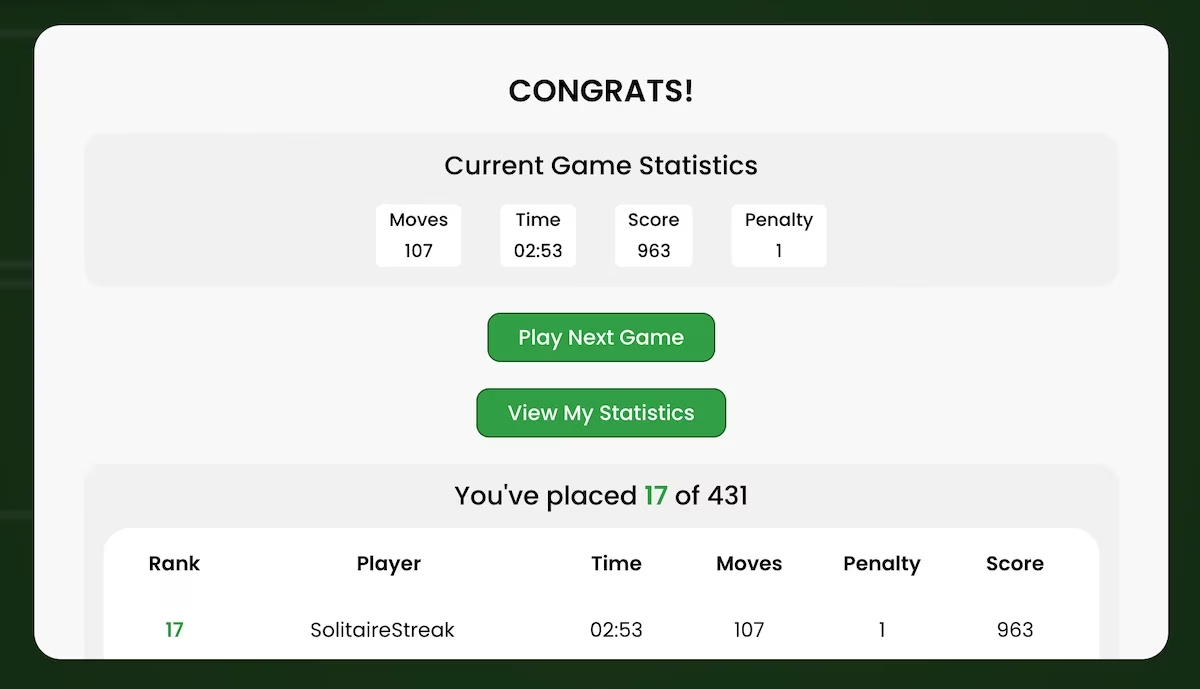
On SolitaireStreak, your score reflects how efficiently you play a timed game. Unlike other Solitaire scoring systems, we don’t assign different point values to different types of moves. Instead, our scoring method balances speed, number of moves, and move efficiency, so careful planning matters to earn a high score.
What Increases Your Score These actions signal fast, confident play and help you earn a high score.
Low time to win
Fewer moves to win
What Decreases Your Score These actions suggest backtracking or extra effort and count as additional movements.
Using the undo button
Moving a card from the foundation back to the tableau
Reusing the stockpile
After each win, you’ll get a full breakdown of your moves, time, score, and penalty moves. With a free account, you can also compare your results to other players and track your progress over time as your play improves.
The Inspiration for Solitaire Scoring
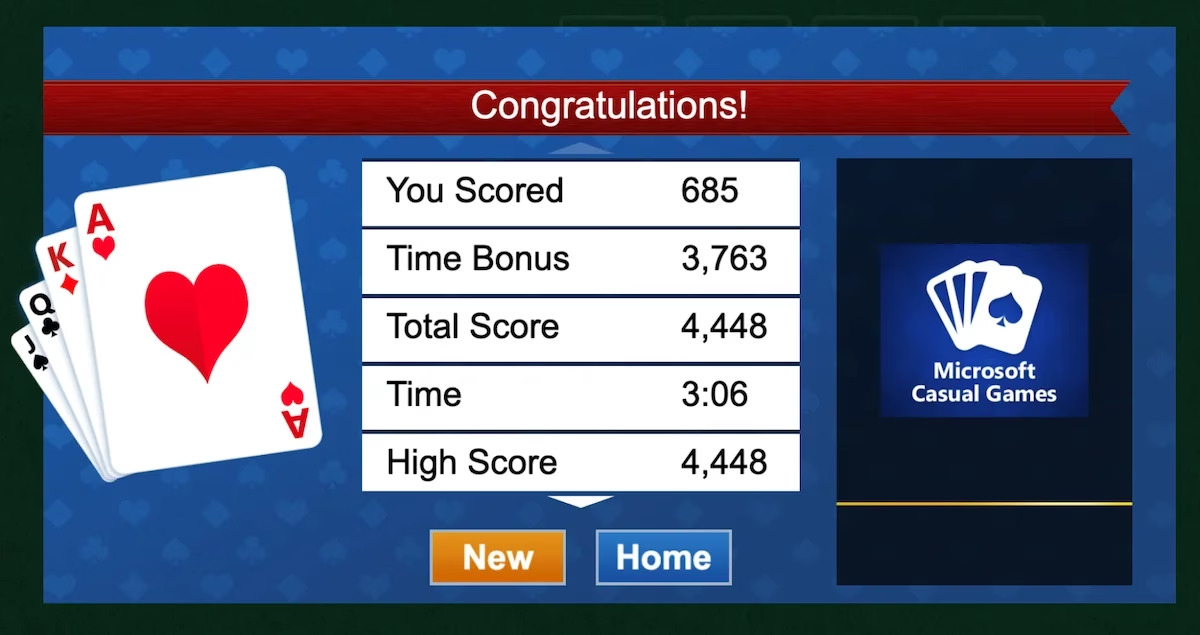
While SolitaireStreak focuses on efficiency and overall performance, other versions of Solitaire use fixed point values for specific actions, an approach popularized by Microsoft Solitaire.
Microsoft Solitaire came pre-installed on Windows computers in the 1990s, which is how millions of players were first introduced to digital Solitaire. Thanks to that massive reach, its standard scoring became the blueprint that many Solitaire games still follow today.
In the Microsoft Solitaire Collection, points are awarded for individual moves, such as:
Uncovering a facedown card: 5 points
Moving a card from the waste pile to tableau: 5 points
Moving a card from the tableau to a foundation pile: 10 points
Moving a card from the waste pile to a foundation pile: 10 points
The game also subtracts 10 points for moving a card from a foundation back to the tableau, though those points are restored if the card is moved back again. Scoring can vary slightly depending on the version you’re playing, and the online version also includes a time-based bonus.
Tips to Maximize Your Solitaire Score
A high score depends on both time and efficiency, so it’s important to understand all the Solitaire rules and take a moment to study the tableau before making your first move. Use these tips to continue improving your score.
Make a plan before you start the game. The timer starts after your first move, so don’t just choose the first opportunity you see. Think ahead and plan the most useful sequence before you move cards.
Prioritize moves that advance gameplay. Not all legal moves are equally valuable. For example, uncovering facedown cards, building down columns with multiple hidden cards, and emptying columns usually create more future options than simply rearranging face-up cards.
Drag and drop your cards. SolitaireStreak offers both click-to-move and drag-and-drop options, which you can adjust under Options > Settings > Game Options. While click-to-move is convenient, it may not always send a card where you intend, potentially adding extra moves.
Be strategic with the stockpile. Repeatedly cycling through the stockpile can add to your score. If a tableau move could uncover a hidden card, try that before flipping through the deck again.
Avoid using Undo when possible. Undo adds extra moves. Instead of testing a move “just to see,” pause and consider what cards you might be blocking or revealing before committing.
Play fast, but stay efficient. Speed matters, but not at the cost of clean play. A slightly slower game with fewer total moves may score higher than a rushed game filled with reversals.
Top the Leaderboard on SolitaireStreak
Your next high score could be just one game away. Create a free SolitaireStreak account to track best scores, fastest times, and fewest moves, and see how your performance compares to players around the world. With Klondike Solitaire, Spider, FreeCell, and many other popular Solitaire variations, there’s always a new challenge waiting.