How to Play Pyramid Solitaire: Setup, Rules & Winning Strategies
January 15, 2026
Written By SolitaireStreak
In Pyramid Solitaire, you remove pairs of cards that add up to 13 until the entire pyramid is cleared. It’s played with a standard 52-card deck, and because of its few rules, it’s one of the easiest Solitaire variations to pick up.
You can play Pyramid Solitaire online for free at SolitaireStreak, where you’ll find helpful features like hints and undo options. We offer three difficulty options: one pass through the stock (hardest), three passes (default, medium difficulty), or unlimited passes (easiest for learning). You can select your desired variation under Options > Settings > Game Options.
Before you get started, here’s what you need to know about how to play Pyramid Solitaire:
Goal: Clear all 28 cards from the Pyramid
Setup: 28 face-up cards arranged in 7 rows (1 card in row 1, 7 cards in row 7); the remaining 24 cards form the stock
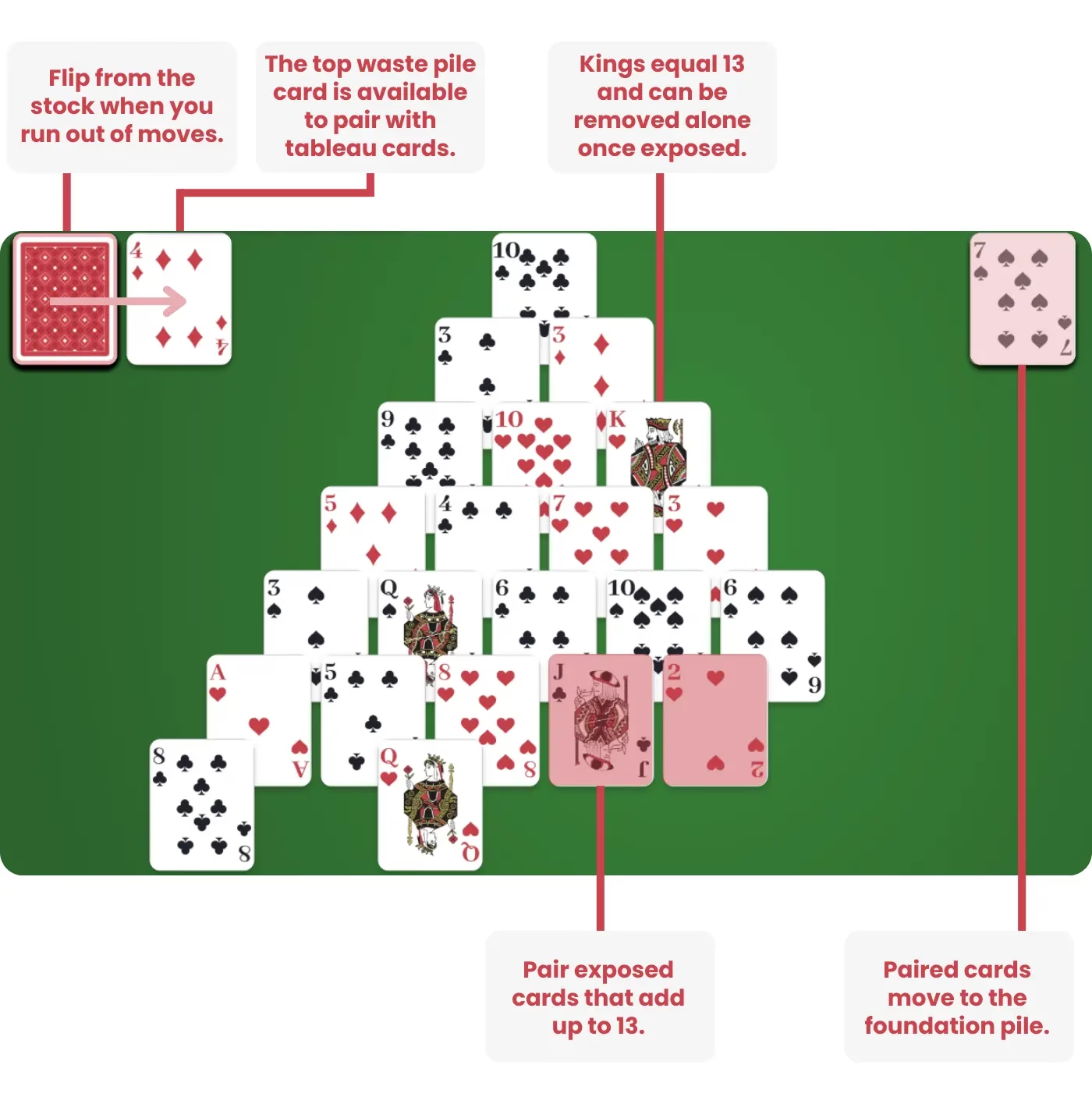
How to remove cards: Pair two exposed cards that sum to 13, or remove a King (worth 13) by itself
Exposed cards: A card is exposed when no other cards overlap its bottom edge
Win condition: Clear the Pyramid before the stock is no longer usable
Pyramid Solitaire Objective
To win Pyramid Solitaire, you must clear the entire 28-card pyramid by removing pairs of exposed cards that total 13. Kings (valued at 13) can be removed individually, while all other cards must pair with their specific partners to reach the target sum.
Setting Up the Pyramid
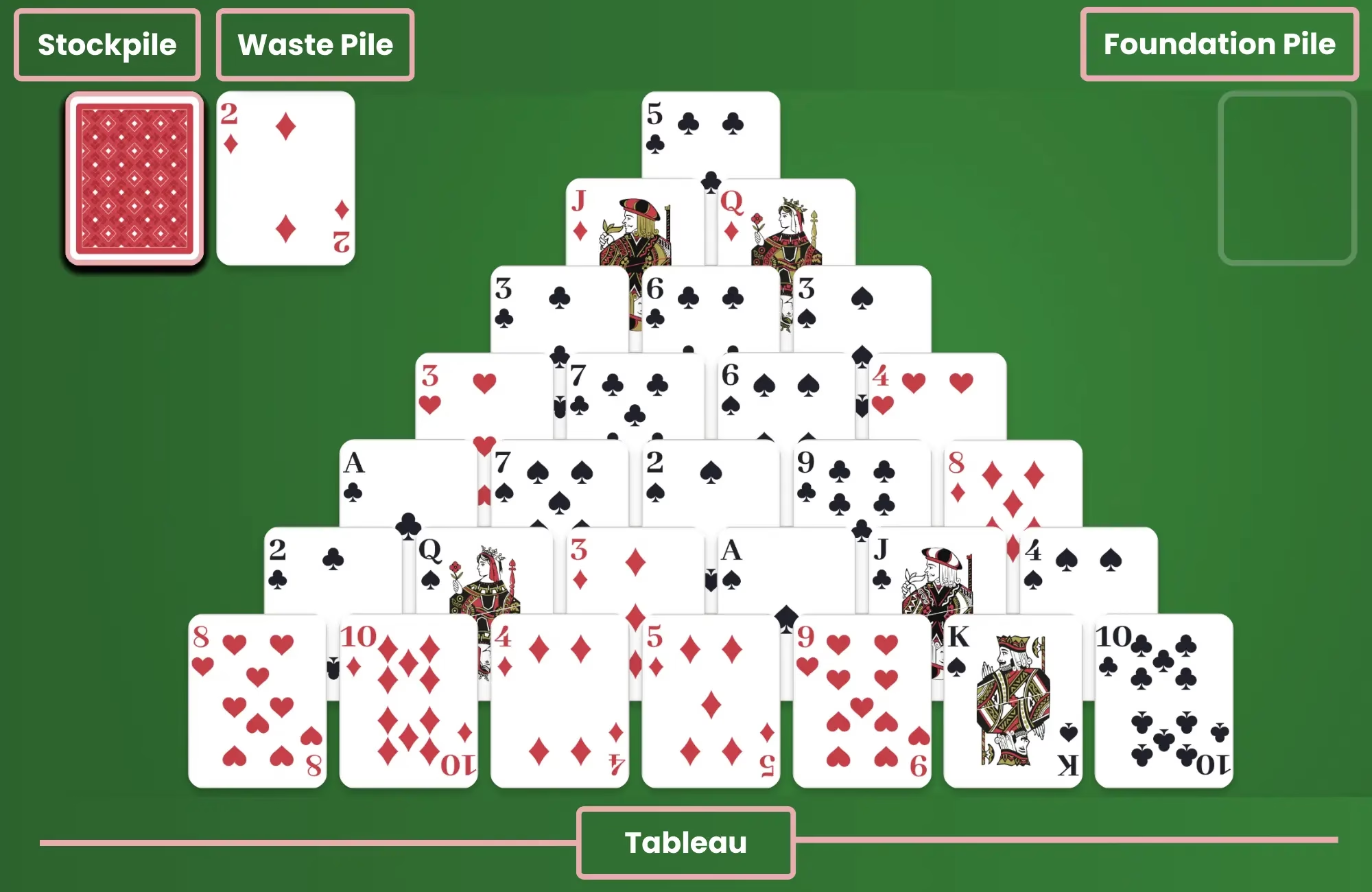
Pyramid Solitaire has four distinct areas that work together throughout the game:
Pyramid-shaped tableau: Deal 28 cards face-up in seven rows, starting with one card at the top and adding one more card per row until the bottom row has seven cards. Overlap the cards so each card in rows 2 through 7 covers the bottom edges of two cards above it. Only cards with no other cards covering their bottom edges are “exposed” and can be played.
Stockpile: Place the remaining 24 cards face-down to form your draw pile. You’ll flip these cards into the waste pile when no cards can be paired in the tableau.
Waste pile: Face-up cards flipped from the stockpile form the waste pile. The top waste pile card can be paired with any exposed card in the tableau.
Foundation pile: Set aside space for removed pairs of cards. Once cards are moved to the foundation, they’re out of play.
Card Values in Pyramid Solitaire
Aces are worth 1, number cards equal their face value, Jacks are worth 11, Queens are worth 12, and Kings are worth 13. Here are all the valid pairing combinations that total 13:
Ace (1) + Queen (12)
2 + Jack (11)
3 + 10
4 + 9
5 + 8
6 + 7
King (13) – removes alone
Pyramid Solitaire Rules: Step-by-Step Gameplay
Pyramid Solitaire follows a simple cycle: remove exposed cards totaling 13, draw from the stockpile when no pairs are available, and continue until you’ve cleared the tableau (win) or run out of moves (lose).
1. Pair Cards That Add Up to 13
Start by identifying which Pyramid cards are exposed and can be paired. Only cards with no other cards covering their bottom edges are available for play.
Look for any two exposed cards that add up to 13. For example, if you see an exposed 6♥ and 7♠, you can remove them as a pair. If you spot an exposed K♦, remove it immediately since Kings equal 13 and don’t need a partner.
Evaluate newly exposed cards after you remove a pair. When you remove a pair, you’ll uncover cards that were previously blocked, which may create new pairing opportunities.
Remember that card suits don’t matter in Pyramid Solitaire—only the numerical values count for pairing.
2. Use the Stockpile and Waste Pile When You Get Stuck
When no valid pairs exist among the exposed Pyramid cards, draw from the stock pile to access new pairing options.
Flip one card at a time from the stockpile to the waste pile. The face-up card placed on the waste pile becomes immediately available for pairing with any exposed Pyramid card. For example, if you draw a 5♣ and see an exposed 8♦ in the Pyramid, you can pair them and remove both cards.
Understand your cycling options. SolitaireStreak offers three difficulty levels that affect how many times you can cycle through the stock:
One pass only: When the stock is empty, the game ends. This requires careful planning from the start.
Three passes: Cycle through the stock up to three times (default). This gives you multiple chances to find pairs and makes the game more forgiving.
Unlimited redeals: Cycle through the stock as many times as needed. This removes time pressure and lets you focus on learning strategy.
3. Clear the Pyramid to Win
Victory in Pyramid Solitaire requires removing all 28 cards from the pyramid structure, regardless of how many stock cards remain unused. You lose if no exposed Pyramid cards can pair with each other or with available waste cards, and you’ve exhausted your allowed passes through the stock.
Common Beginner Mistakes
Forgetting Kings can be removed individually
Removing pairs without considering card exposure strategy
Using the stock pile too early
Focusing on one area of the pyramid instead of balancing moves
Winning Pyramid Solitaire Strategies and Tips
The concept of Pyramid Solitaire is easy, but planning ahead and removing cards strategically can make or break your game. Use these tips to help improve your game.
Remove Kings immediately when they become exposed. Since Kings don’t need partners, they’re always safe to remove and will expose new cards underneath. There’s never a reason to leave an exposed King in place.
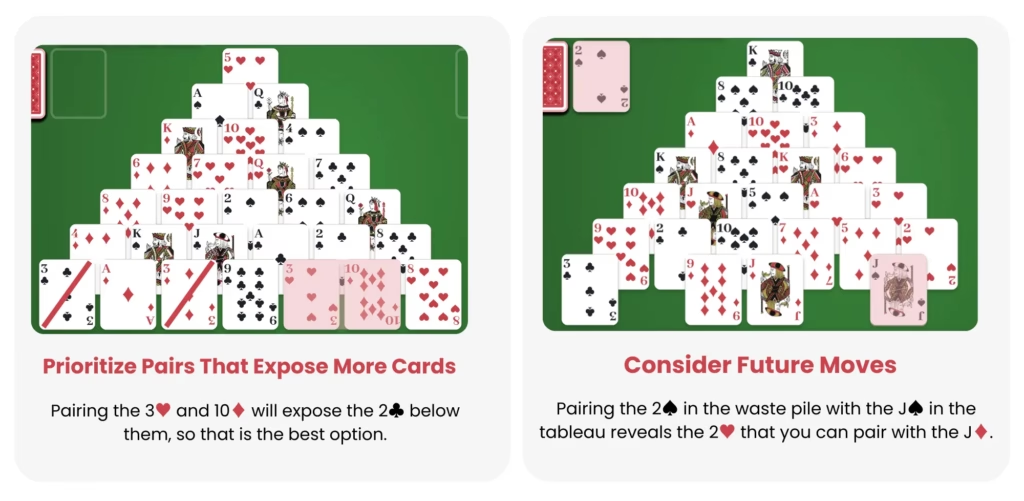
Prioritize pairs that expose multiple new cards. When you have several pairing options, choose the pair that will uncover the most new cards. For example, pairing a 3♥ and 10♦ side-by-side in the bottom row will expose the 2♣. Pairing the 10♦ with a 3♦ elsewhere in the row won’t expose any cards, so the 3♥ is the better option.
Don’t rush to use the stockpile. Before drawing from the stock, scan the entire Pyramid for all possible pairs. You might spot a combination you missed on your first look. The stock pile is your backup plan, not your primary strategy.
Choose the card pairing that leads to the most future moves. For example, pairing the 2♠ in the waste pile with the J♠ in the tableau reveals the 2♥ that you can pair with the J♦.
Play Pyramid Solitaire on SolitaireStreak
Ready to put your Pyramid Solitaire skills to the test? Play Pyramid Solitaire instantly in your browser with no downloads required. Track your progress with detailed statistics that show your win rate, average time per game, and best scores. You can also explore other Solitaire games like Klondike, Spider Solitaire, and FreeCell all in one place.