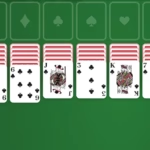
FreeCell stands apart from other types of Solitaire because every card is face-up from the start, making it a game of pure strategy rather than luck. Your goal is to move all 52 cards to four foundation piles, building each suit from Ace to King. The twist is that there isn’t a stockpile like in classic Solitaire. There are only four free cells to use as temporary storage spaces as you arrange the tableau piles.
Since you can see all the cards, most FreeCell deals are winnable, but only if you know how to plan your moves strategically. We’ll walk you through every essential FreeCell strategy to help you master the game. Practice your new skills by playing online on SolitaireStreak.
1. Make a Plan to Free Aces and Twos
Your first priority in any FreeCell game is to identify where your Aces and Twos are hiding. These foundation-building cards are essential for getting your game moving, but they’re often buried under other cards in the tableau columns.
When to use this strategy: At the very start of the game, before making any moves, scan the eight columns and note which Aces are immediately available versus which ones are trapped under sequences. Prioritize freeing the most accessible ones first.
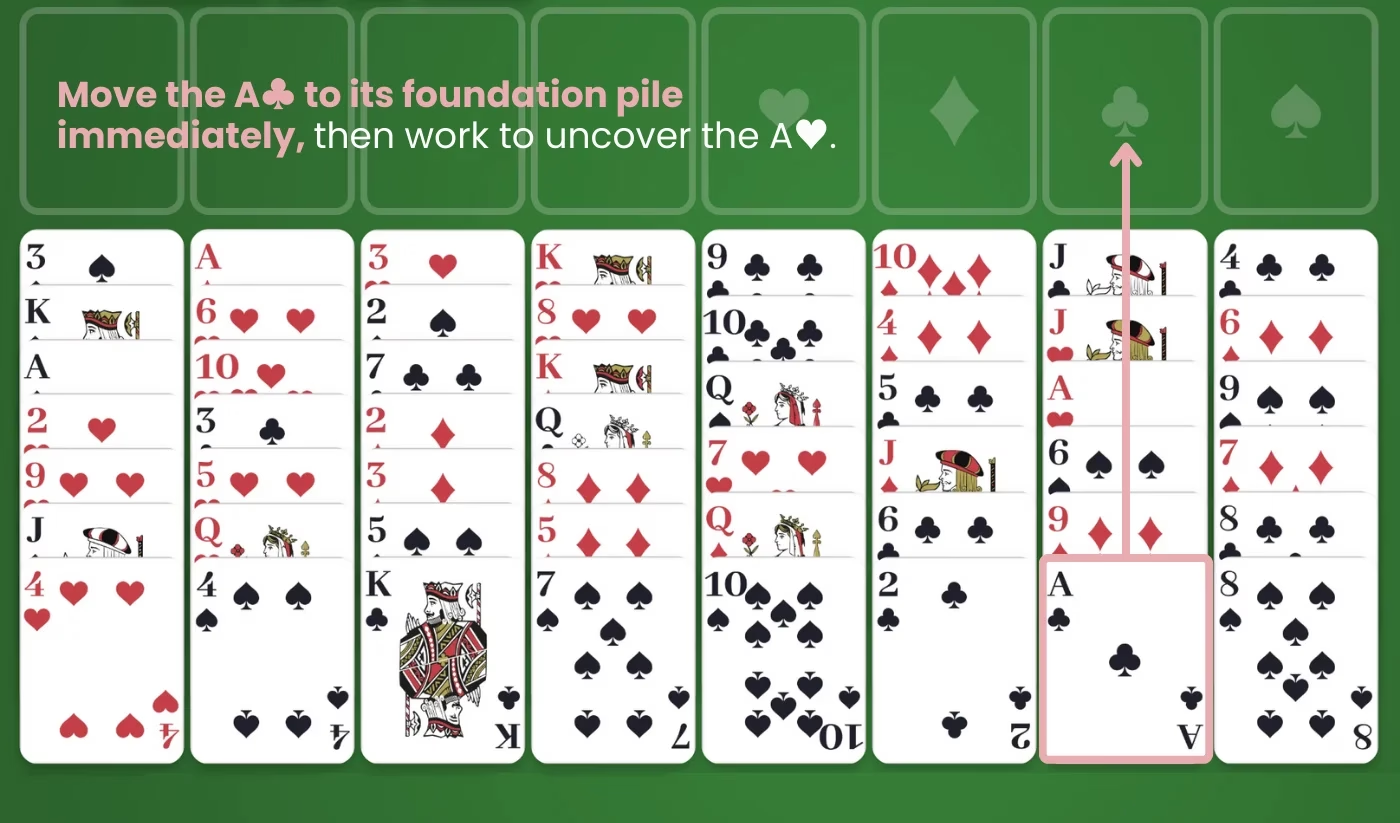
Example: The A♣ is at the bottom of the seventh column, so move it to its foundation immediately. Then you can move the 9♦ to the 10♠ and the 6♠ to a free cell to access the A♥. Since both red 7s aren’t buried deep in columns, you know that you’ll be able to move the 6♠ back to the tableau relatively easily.
2. Use Free Cells as Temporary Storage Only
The biggest mistake new FreeCell players make is treating free cells like permanent parking spaces. These four storage spots should function as temporary holding areas that enable bigger moves, not as dumping grounds for problem cards. Cards that sit in free cells without a clear exit strategy become dead weight that limits your options.
The “n+1 rule” governs how many cards you can move as a sequence. With all four free cells empty, you can move sequences of up to five cards. With three free cells empty, you can move four cards, and so on. Each occupied free cell reduces your sequence-moving power.
When to use this strategy: Keep this strategy in mind throughout the game. Only place cards in free cells when doing so immediately enables a move that advances your game, such as accessing a buried foundation card or creating space for a longer sequence.
Every time you place a card in a free cell, you should already know:
How you’ll use the mobility the free cell placement creates
How you’ll eventually move that card out of the free cell.
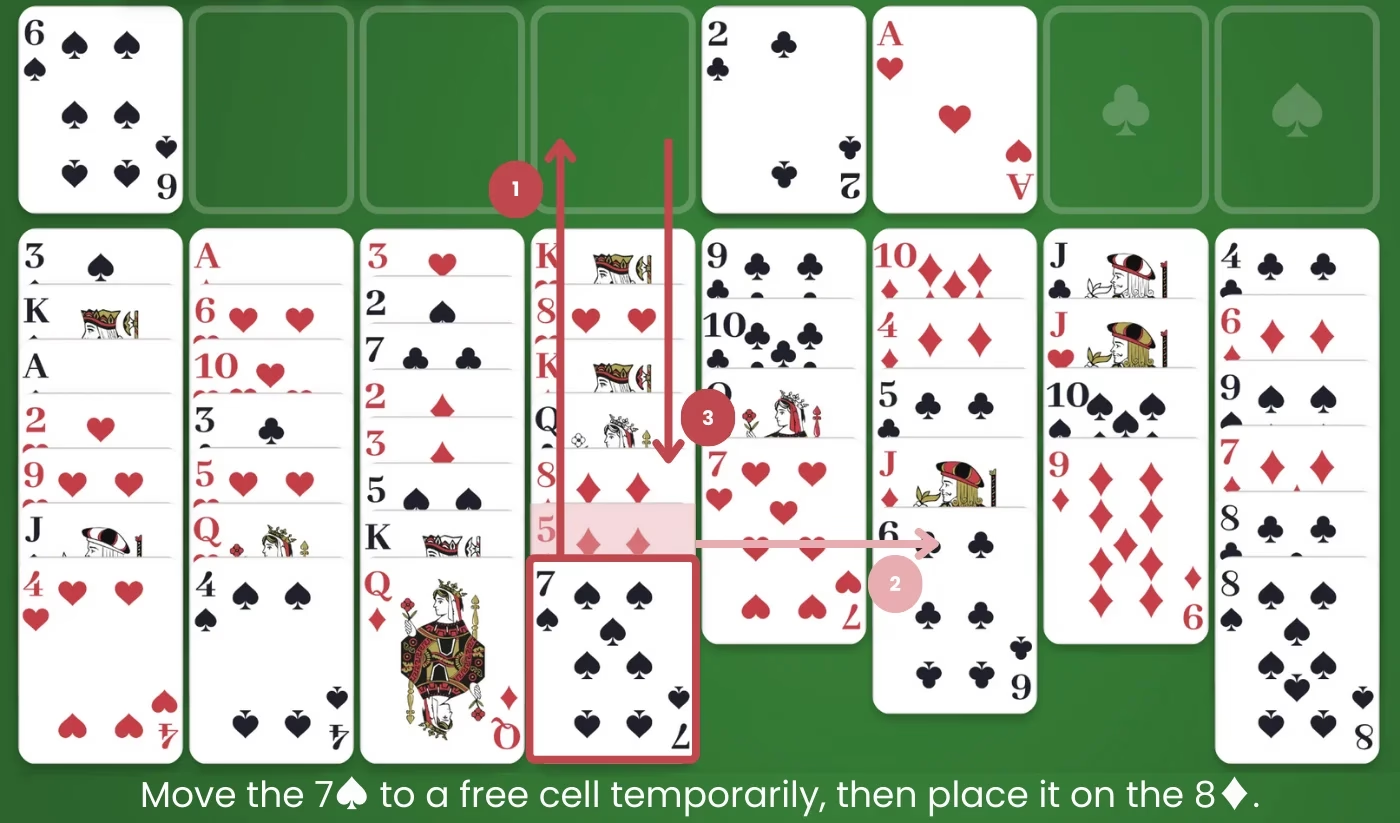
Example: Moving the 7♠ to a free cell allows you to move the 5♦ to the 6♣. Then, you can move the 7♠ back to the tableau on the 8♦. This created two ordered descending sequences that can be moved as groups without blocking free cells.
3. Create Empty Columns Early and Strategically
Empty tableau columns are your most powerful tool for rearranging sequences and accessing buried cards. Unlike free cells, which can only hold one card each, empty columns can temporarily store entire sequences while you reorganize other parts of the tableau.
Once you have an empty column, use it actively. Move sequences in and out to access buried cards, break apart problematic arrangements, and create new building opportunities.
When to use this strategy: Look for columns where the cards can easily be sequenced in other columns or go to foundations. As you move through the game, pay special attention to short columns that can be cleared.
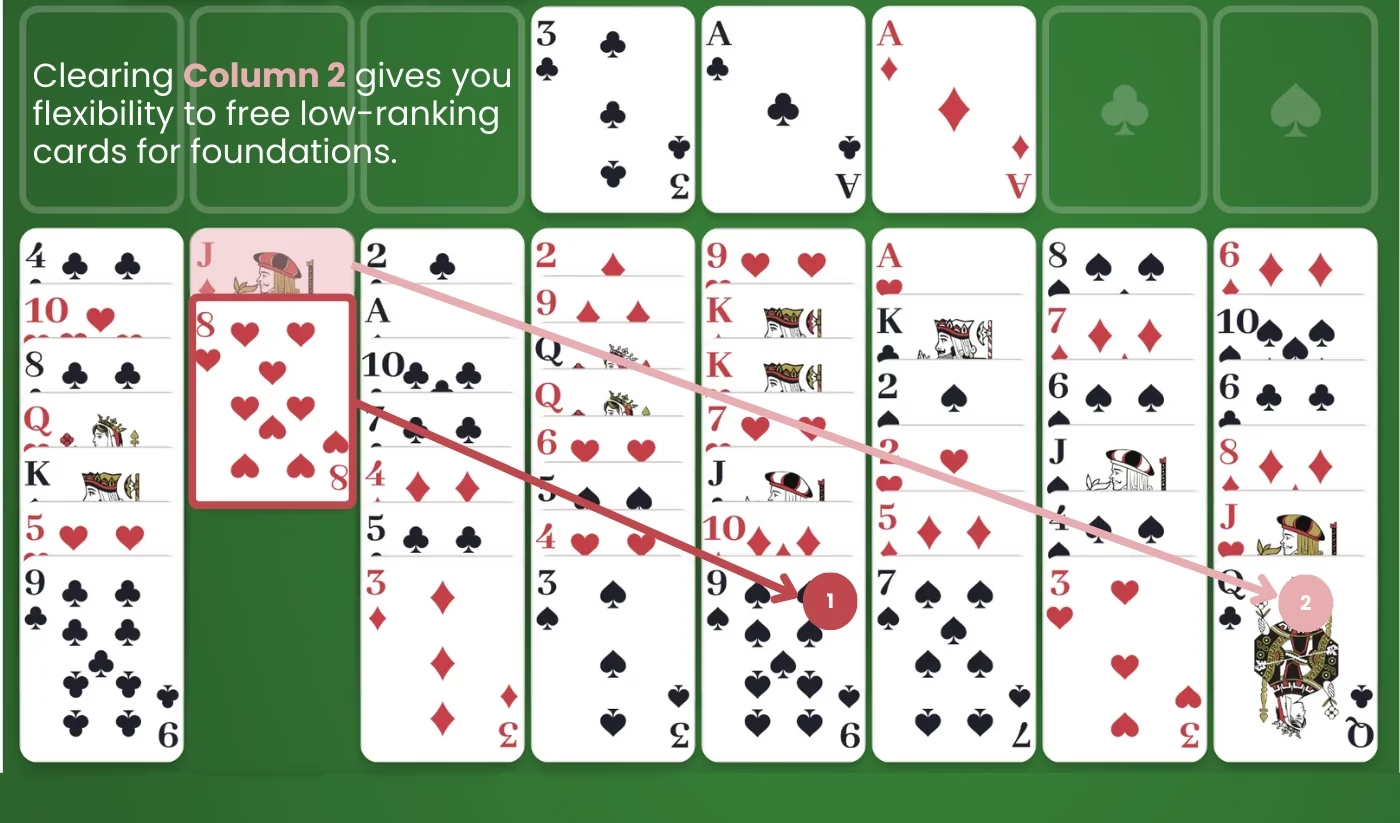
Example: The second column only has an 8♥ and J♦, which can be moved to the 9♣ and Q♣, clearing the column.
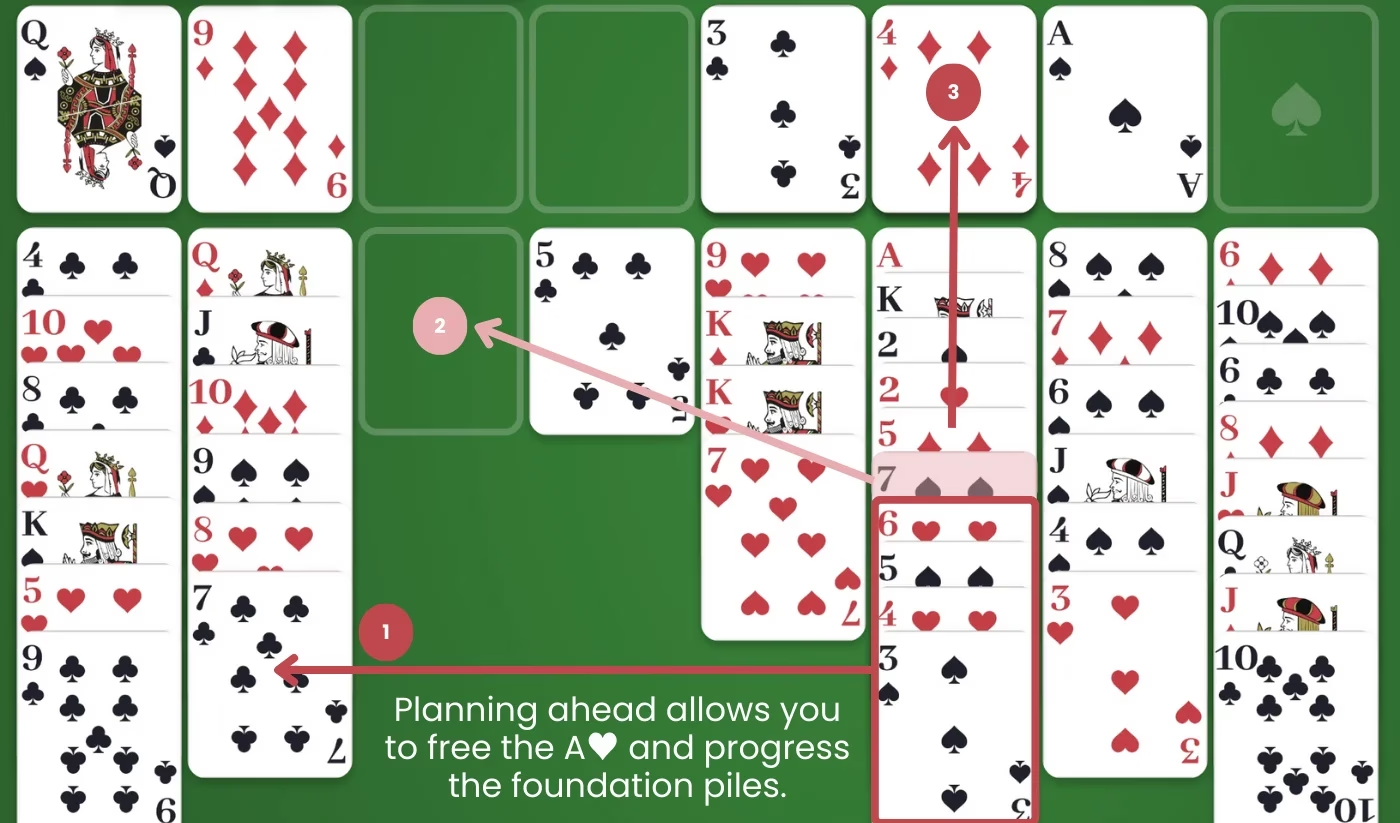
Since it’s still early in the game, your focus is on accessing the Aces and Twos. Move the 6♥-5♠-4♥-3♠ sequence to the 7♠. Then leverage the empty column and free cells to free the 2♦, creating a new empty column. You can use this empty column to help further rearrange cards, freeing the A♠ and 2♣.
One empty column can be the gateway to significantly progressing your foundations early in the game.
4. Balance Free Cell Storage and Tableau Mobility
Think of free cells as your emergency toolkit for quick fixes, while empty columns are your workshop for major renovations. Free cells offer the simplest storage—one card per space, easily accessible. Tableau columns offer more complex storage where you can build sequences and reorganize the tableau.
Use free cells to temporarily store single cards that block important moves, and use empty columns to rearrange sequences, access buried cards, and create the space needed for complex maneuvers.
When to use this strategy: When you have both free cells and tableau space available, choose the option that creates the most future mobility rather than the most convenient immediate storage.
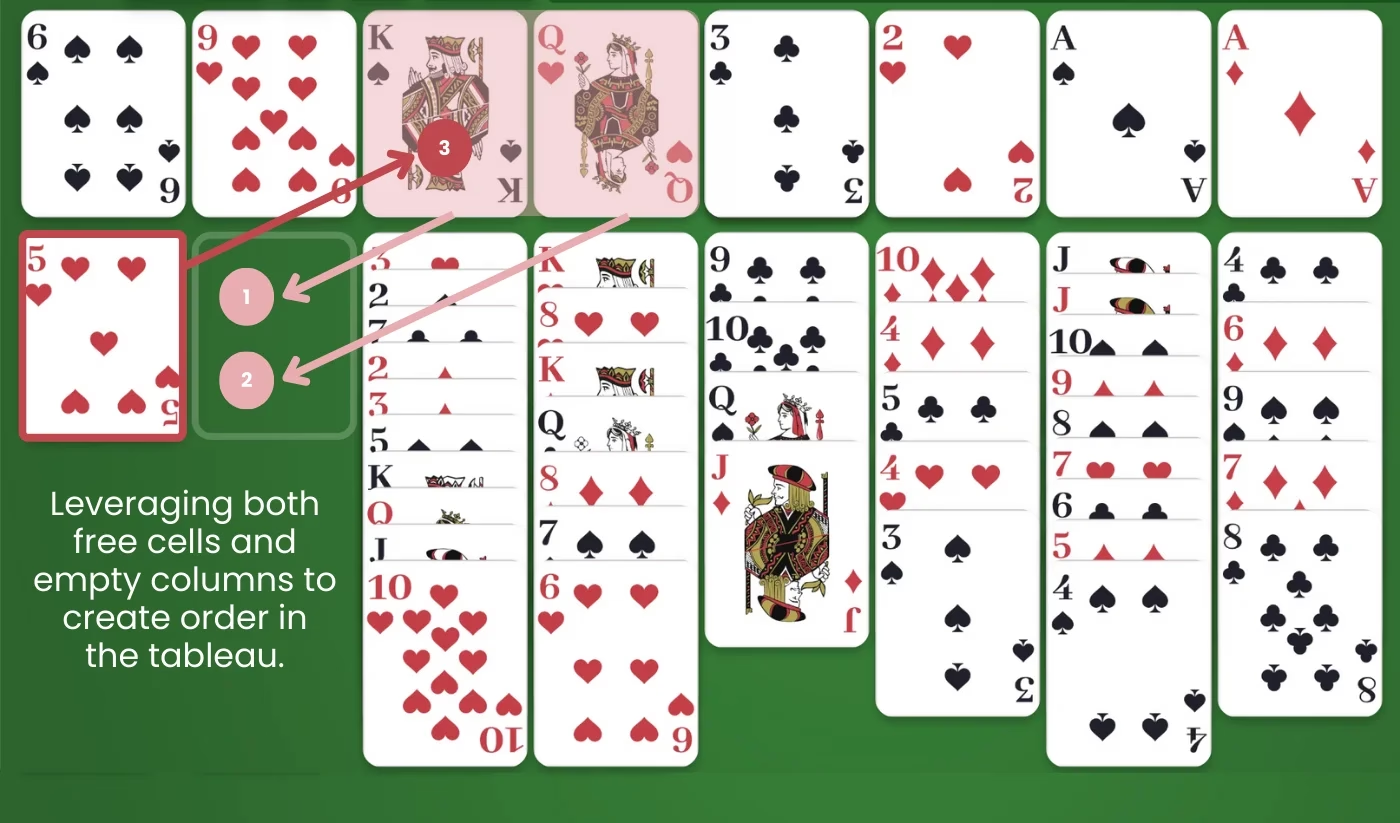
Example: All four free cells were intentionally filled in order to create an empty column that will help reorder the tableau.
The K♠ and Q♥ can be moved to the empty column. This allows the 5♥ to be moved to a free cell, creating a new empty column in which the 9♥-8♣-7♦-6♠-5♥ sequence can be formed from cards in the free cells and eighth column.
In turn, the 9♠ moves on top of the 10♥ and the 6♦ moves to a free cell, uncovering the 4♣ for its foundation pile. Now, the eighth column is empty.
You can see how creating a single empty column can quickly cause a chain reaction that improves mobility across the board.
5. Plan Multiple Moves Ahead Before Committing
FreeCell rewards players who think several moves ahead rather than reacting to immediate opportunities. Before making any move, trace through the next three or four potential opportunities to ensure you’re not creating new problems while solving current ones.
Pay special attention to how each move affects your free cell availability and sequence mobility. A move that looks good in isolation might trap you later if it reduces your maneuvering options at a critical moment.
When to use this strategy: Before making any move that involves multiple cards or uses your last free cell, work through the logical sequence of follow-up moves to ensure you understand the upsides and potential downfalls.
Example: At this stage in the game, there are many moves you can make, but it’s important to identify the best ones. Since you need to free low-ranking cards, make a plan for how to do that. For example, moving the 6♥-5♠-4♥-3♠ sequence to the 7♣ allows you to move the 7♠ to the empty column and the 5♦ to its foundation.
The 2♥ can move to the 3♠, freeing the 2♠ for its foundation. Now, you’re easily able to move the A♥, 2♥, and 3♥ to form the final foundation pile. By thinking ahead, you significantly advanced the game.
6. Keep Cards in the Tableau When They Are Needed for Building Sequences
The urge to move cards to foundation piles immediately can actually hurt your chances of winning. Cards in the tableau remain available for building sequences, which is especially important for maintaining color balance. If you build your black foundations too far ahead of your red foundations or vice versa, you’ll struggle to create the alternating-color sequences needed to rearrange cards.
The general rule: only move cards to foundations when they’re not needed for tableau building.
When to use this strategy: Before moving any card to a foundation, check whether you need it for building sequences with currently visible cards or cards you’ll access soon.
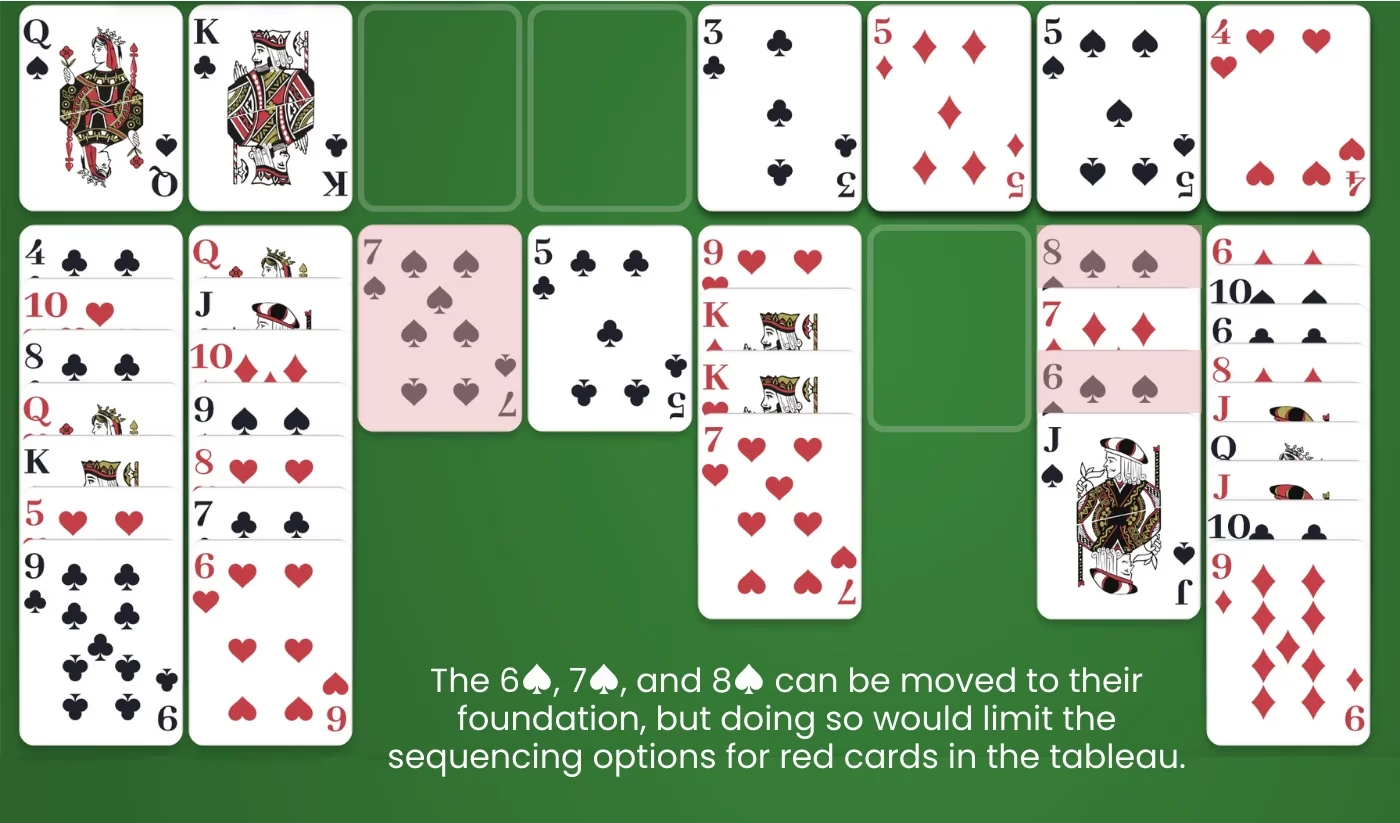
Example: You could easily access the 6♠, 7♠, and 8♠ for their foundation pile, but that would mean that the 5♥ could only be placed on the buried 6♣ and the two red 7s could only be placed on the buried 8♣, unless they were moved to an empty column or a free cell.
Waiting to move the spades is the better choice to preserve mobility within the tableau.
7. Leave Columns Empty to Move Long Sequences (Supermoves)
With no empty columns, you can move sequences equal to your free cells plus one. But add just one empty column, and you double that capacity (as long as you aren’t moving cards into that empty column or there are multiple empty columns available). This exponential increase makes empty columns incredibly valuable for major reorganizations.
When to use this strategy: When you need to move sequences longer than your free cells allow, or when you want to preserve free cell availability while still moving multiple cards.
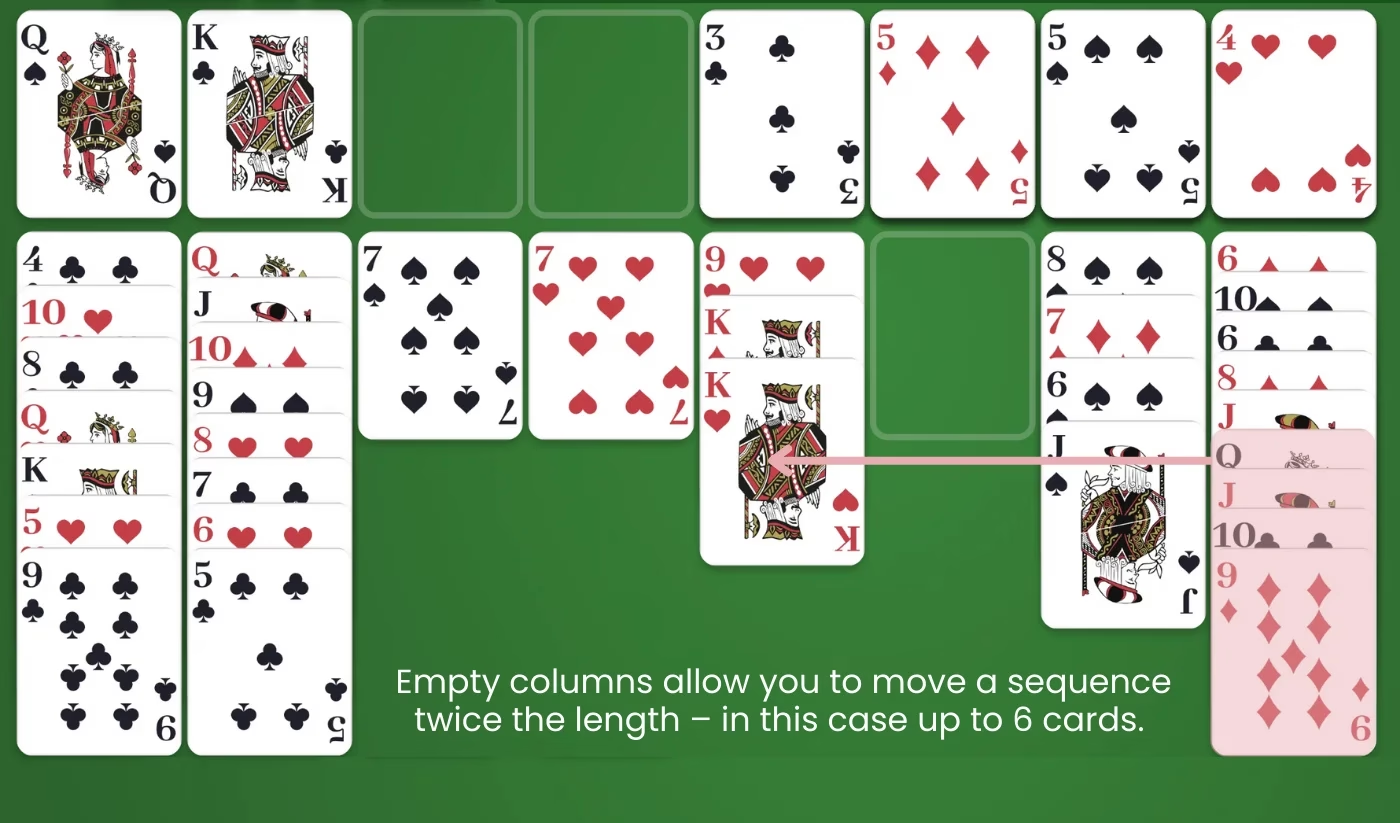
Example: Since you have two open free cells and one empty column, you can move a sequence of up to six cards (2+1)*2. This allows you to move the Q♣-J♦-10♣-9♦ to the K♥.
You can then move the J♥ to the empty column, the 8♦ to the 9♣, the 7♠ to the 8♦, the 6♣ to the 7♥, the 10♠ to the J♥, and the 6♦ to its foundation. This creates another supermove opportunity, allowing you to move the K♥-Q♠-J♦-10♣-9♦ into an empty column. In a few more moves, you can order the entire tableau and win the game.
8. Recognize and Deconstruct Bottlenecks
Bottlenecks occur when key cards become trapped under sequences that can’t be easily moved. These situations can stall your entire game if you don’t recognize and address them systematically.
The most common bottlenecks include:
Low ranking cards trapped under long sequences. For example, if A♥ sits under K♠-Q♦-J♣-10♥-9♠-8♦-7♣, you need to find homes for that entire sequence before accessing your Ace. This requires careful planning and often multiple empty spaces.
High cards (Kings and Queens) occupying spaces in the middle of columns. A King in the middle of a column can block access to everything beneath it, while a King that could move to an empty column opens up multiple new possibilities.
When to use this strategy: Use this strategy when you spot foundation cards trapped under long sequences or when high cards are preventing access to multiple other cards you need. Identify what’s blocking your target card and work backwards from your goal. Then create a plan to systematically remove each layer of obstruction.
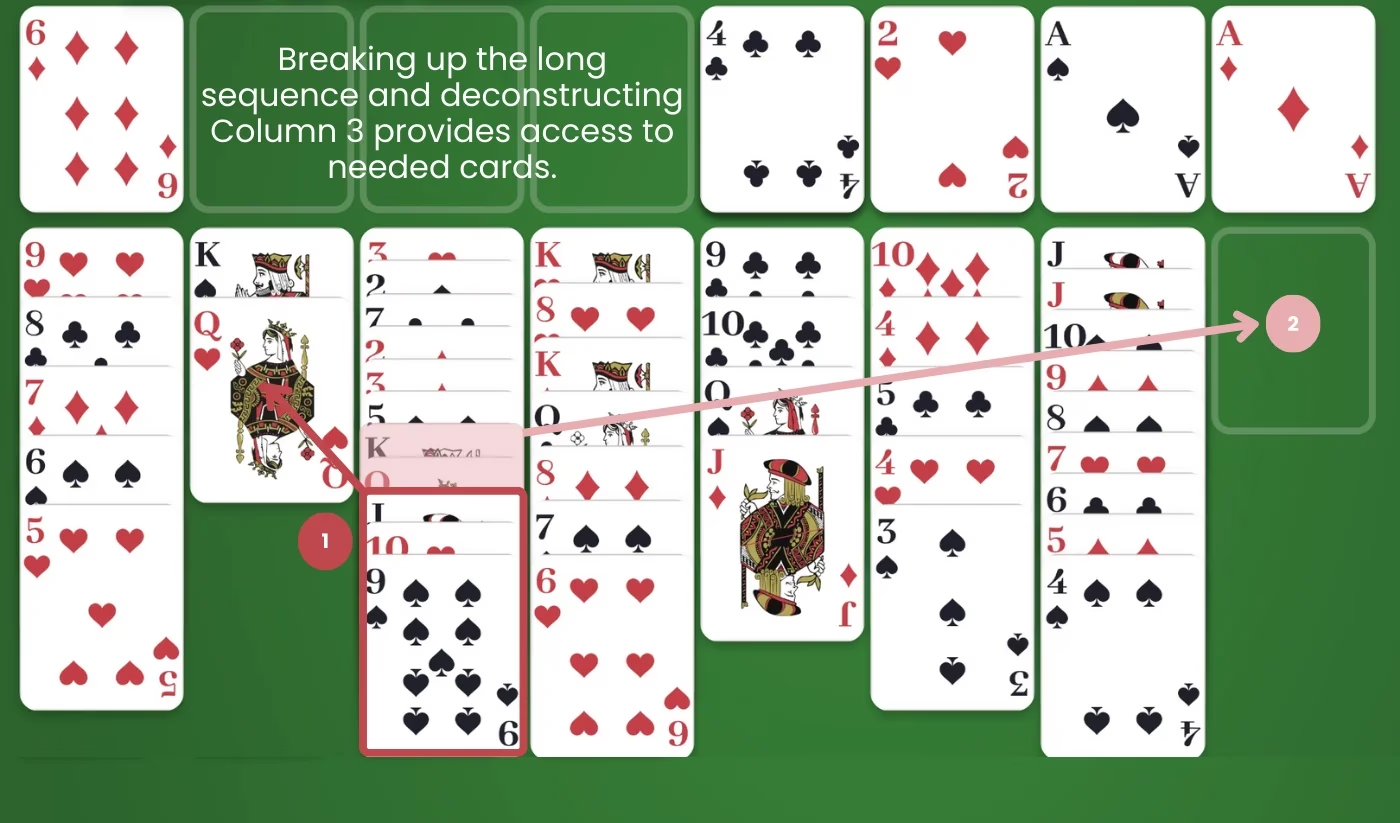
Example: The third column has several low cards needed to advance the game, but they are blocked by the K♣-Q♦-J♠-10♥-9♠ sequence. Since there are three empty free cells, only four cards can be moved at a time.
In order to unblock the tableau, you must deconstruct the sequence of cards by moving the J♠-10♥-9♠ onto the Q♥. Then you can move the K♣-Q♦ to the empty column, the 5♠ to the 6♥, and the 3♦ to the 4♠, freeing up the 2♦ and 3♦ for their foundation pile.
Master FreeCell Strategies on SolitaireStreak
FreeCell Solitaire rewards methodical thinking over quick reactions. Unlike luck-based Solitaire games, every move you make stems from strategic analysis. The players who win consistently plan multiple moves ahead, manage their storage resources wisely, and recognize when short-term sacrifices lead to long-term gameplay advantages.
With features like winnable deals, hints when you’re stuck, and an undo button to experiment with different approaches, you can practice these strategies by playing FreeCell online on SolitaireStreak. And if you need a refresher on how to play, check out our guide on FreeCell rules.