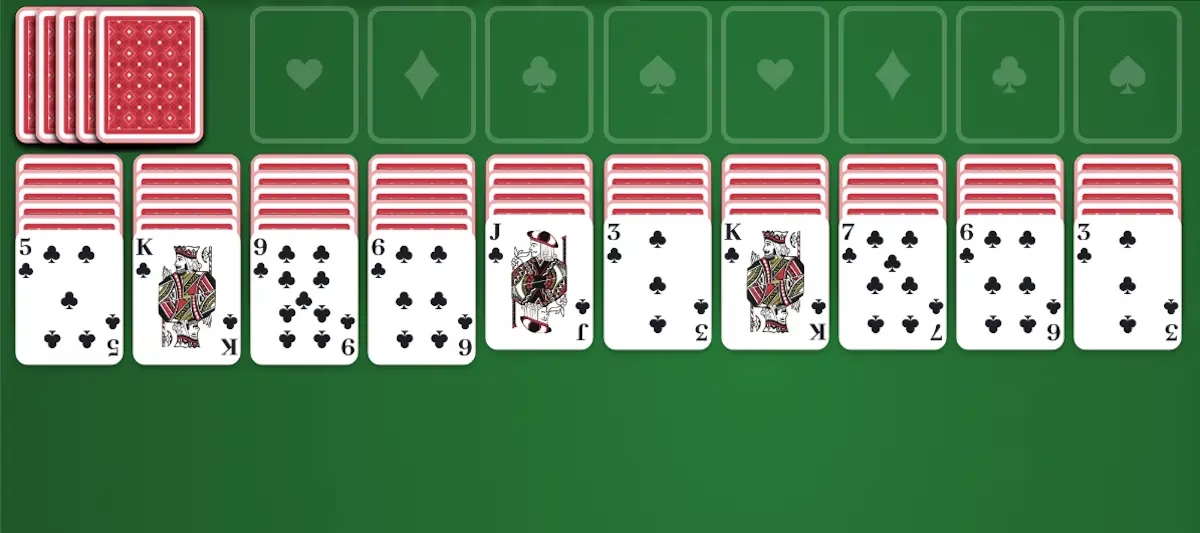
Most players know Klondike as “classic” Solitaire, but hundreds of other variants exist. Each Solitaire game uses similar mechanics — either building sequences like FreeCell and Spider or matching and pairing like Pyramid and TriPeaks — but they all have unique strategies and challenges.
We’ve ranked 10 popular types of Solitaire by difficulty level to help you find your next game. You’ll get rules, strategic tips, and guidance about which games match your skill level and interests.
Quick Reference: Types of Solitaire at a Glance
Solitaire Game
Difficulty (1-5)
Type
Key Mechanic
Best For
TriPeaks
1
Matching/pairing
Cards one rank higher/lower
Fast, casual players
Pyramid
2
Matching/pairing
Remove pairs totaling 13
Quick, number-focused players
Golf
2
Matching/pairing
Cards one rank higher/lower, limited stock
Fast games with strategy
Klondike (Turn 1)
2
Sequencing
Alternating colors, descending order
Beginners learning Solitaire
FreeCell
3
Sequencing
Four free cells for storage
Players who plan ahead
Spider (1 Suit)
3
Sequencing
Complete King-to-Ace sequences
Fans of longer games
Klondike (Turn 3)
3
Sequencing
Alternating colors, descending order; three-card stock draws
Classic Solitaire players seeking difficulty
Spider (2 Suits)
4
Sequencing
Complete King-to-Ace sequences; two-suit building complexity
Strategic thinkers who enjoy longer games
Yukon
4
Sequencing
Move any face-up card in a column and sequence in descending order, alternating colors
Players who enjoy challenging sequencing with multiple recovery paths
Scorpion
4
Sequencing
Move any face-up card in a column and sequence in descending order by suit
Players who enjoy complex sequencing with limited room for errors
Canfield
5
Sequencing
Reserve pile management
Players who enjoy managing limited resources
Forty Thieves
5
Sequencing
Same-suit building only; move one card at a time; one stock pass
Advanced players who like strict rules
Spider (4 Suits)
5
Sequencing
Complete King-to-Ace sequences; four-suit building complexity
Experts seeking maximum challenge
10 Types of Solitaire Games (Ranked by Difficulty)
1. TriPeaks Solitaire
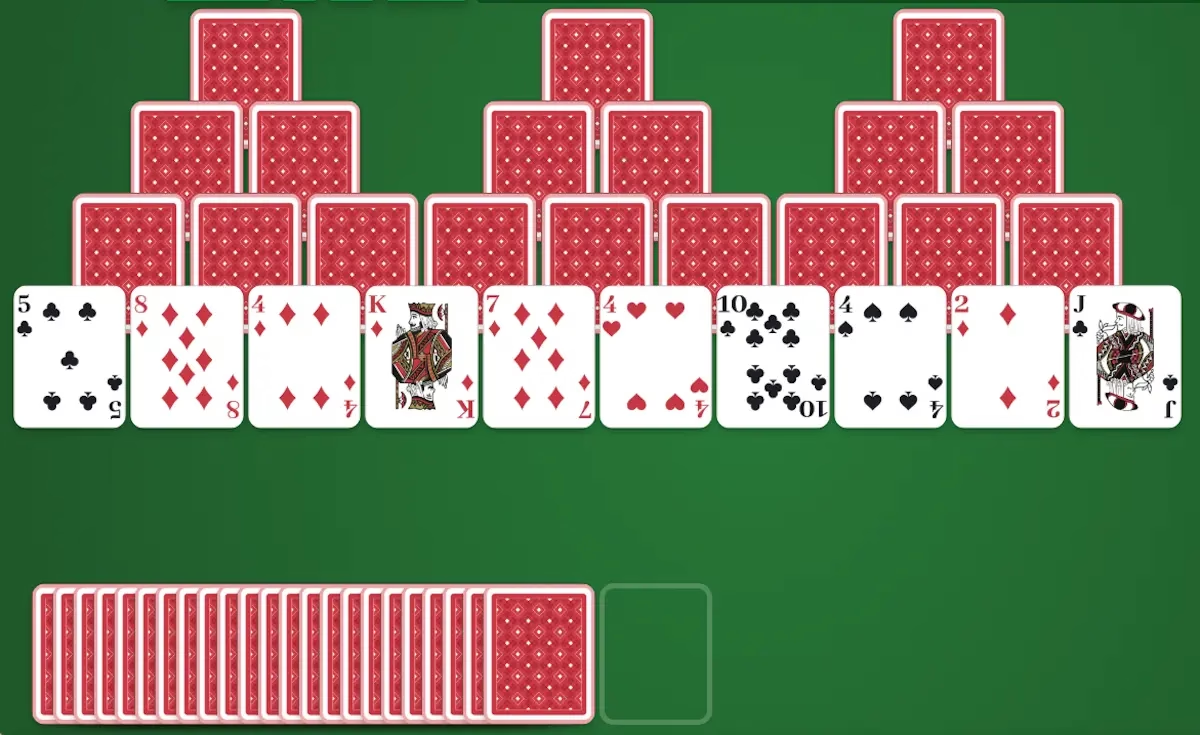
Objective: Clear three overlapping triangular peaks by removing cards one rank higher or lower than the top waste pile card.
Best for: Players seeking fast-paced action with simple rules.
How to play: Remove any uncovered card that is one rank higher or lower than the current waste pile card. For example, a 5 or 7 may be played on a 6, and the sequence can continue up or down. Aces may be played on both Kings and Twos.
Strategic tips:
Choose cards that will lead to the most consecutive moves.
Prioritize exposing facedown cards.
Deconstruct the three peaks as evenly as possible.
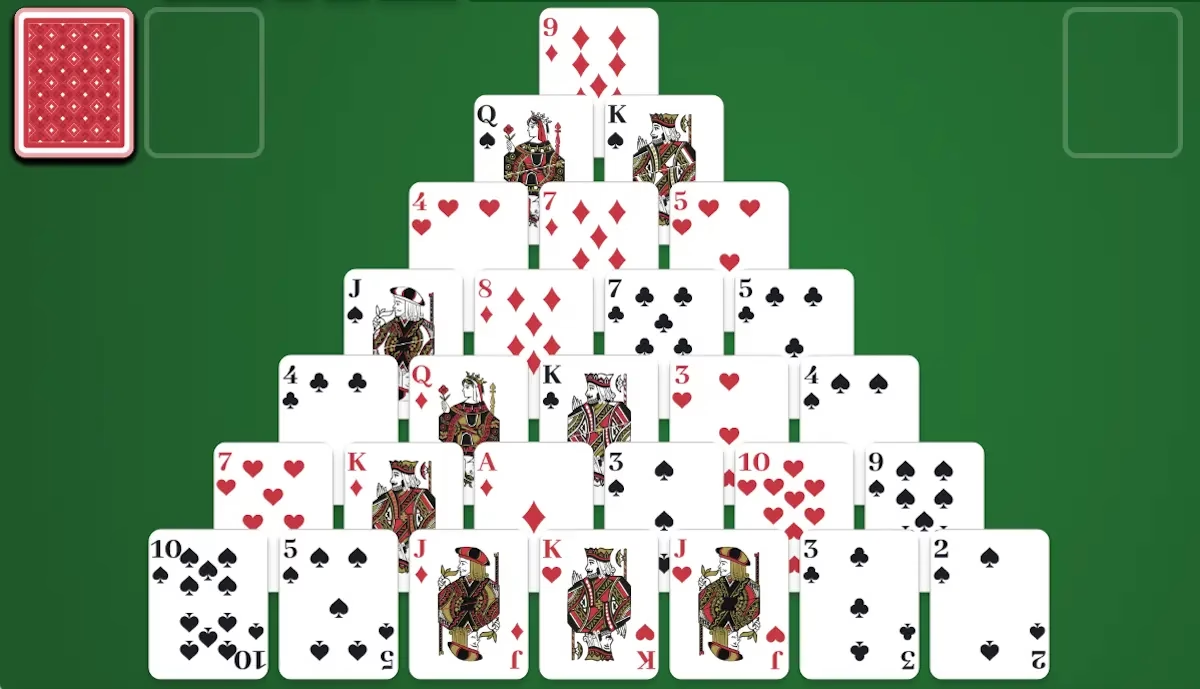
Objective: Remove all cards from the pyramid-shaped tableau by pairing cards that total 13.
Best for: Players who enjoy quick pattern recognition games and prefer pairing over complex sequencing.
How to play: Remove pairs of uncovered cards that add up to 13: Queen (12) with Ace (1), Jack (11) with 2, 10 with 3, 9 with 4, 8 with 5, or 7 with 6. Kings count as 13 and may be removed on their own. Only uncovered cards may be paired, and the stockpile can be cycled through a maximum of three times.
Strategic tips:
Focus on moves that expose buried cards.
Remove Kings immediately.
Use the stockpile only when tableau moves aren’t available.
Objective: Remove cards from the tableau that are one rank higher or lower than the top waste pile card.
Best for: Players who enjoy quick games and strategic puzzle-solving.
How to play: Play any card from the tableau that is one rank higher or lower than the top card of the waste pile. When no moves are available, draw from the 16-card stock, which can be used only once. Aces may be played on both Kings and 2s.
Strategic tips:
Look for long sequences before playing single cards.
Prioritize removing cards in longer columns.
Use the stockpile carefully. With only 16 cards available, every draw matters.
4. Klondike Solitaire (Turn 1 and Turn 3)
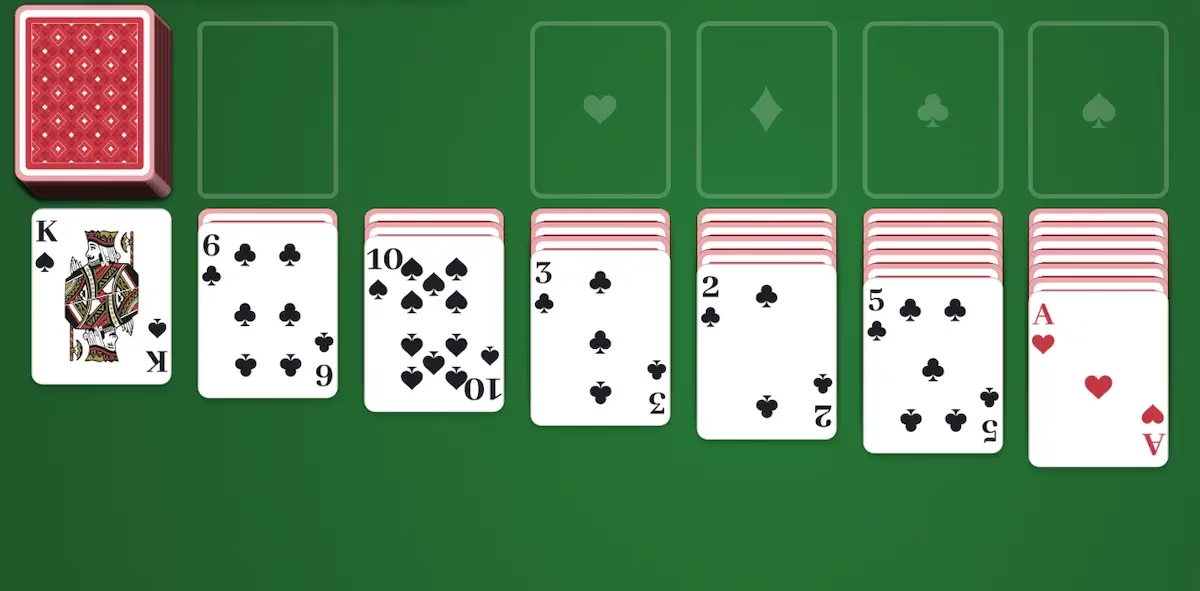
Objective: Move all 52 cards to four foundation piles, building each suit from Ace to King.
Best for: New Solitaire players and anyone wanting a familiar, manageable challenge.
How to play: Arrange tableau cards by building sequences in descending order, alternating colors. As you uncover cards, move Aces to the foundation piles and build each foundation up by suit, from Ace to King. When you need more cards, draw from the stock — either one card at a time (Turn 1) or three cards at a time (Turn 3). Only Kings or King sequences can fill empty columns.
Strategic tips:
Prioritize moves that uncover face-down cards in long columns.
Keep red and black suits balanced in foundations — building one color too fast limits your tableau sequencing options.
Don’t clear a column unless you have a King to place there.
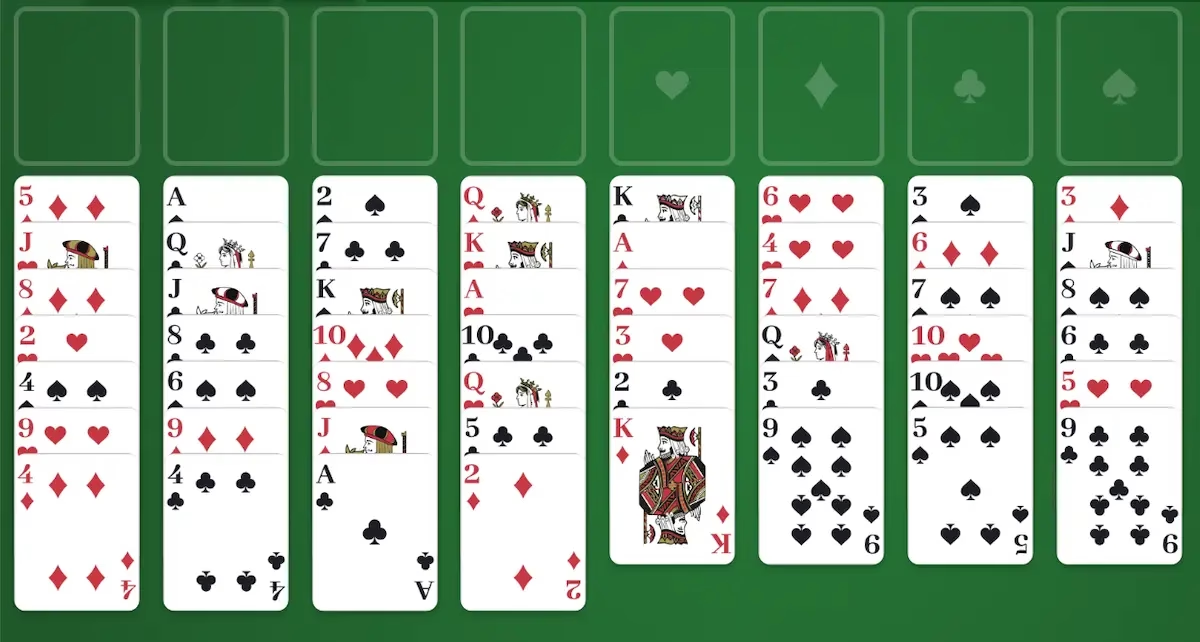
Objective: Move all cards to four foundation piles using four free cells as temporary storage.
Best for: Strategic thinkers who enjoy games where skill matters more than luck. All cards are face-up, allowing you to plan ahead.
How to play: Build the foundation piles by suit, starting with Aces and continuing up to Kings. In the tableau, arrange cards in descending order while alternating colors. Use the free cells to temporarily hold single cards to help reorganize the tableau or free cards for the foundations. The number of available free cells (n) limits how long a sequence you can move (n+1). Any card or legal sequence can fill a column.
Strategic tips:
Locate all Aces at the start of the game and make a plan to free them.
Don’t fill all four free cells unless absolutely necessary.
Objective: Build complete same-suit sequences from King to Ace in the tableau to fill all eight foundation piles and win.
Best for: Players who enjoy longer, methodical games and multi-level challenges. Spider Solitaire 1-Suit is the easiest, 2-Suit is intermediate, and 4-Suit is difficult.
How to play: Build sequences in descending order regardless of suit, but only complete same-suit King-to-Ace sequences can be moved to foundation piles. If you get stuck, use the stockpile to deal ten new cards to the bottom of each column — it can be used five times. Any card or legal sequence can fill a column.
Strategic tips:
Focus on building long sequences instead of multiple partial-sequences.
Empty columns are powerful—use them to reorganize sequences and access buried cards.
Don’t deal stockpile cards until you’ve exhausted all current moves.
Objective: Build four foundation piles by suit from Ace to King, similar to Klondike but with more face-up cards and no stockpile.
Best for: Advanced players comfortable with complex decisions and dynamic sequencing.
How to play: Sequence cards in descending order, alternating colors. You can move any face-up card along with all cards on top of it, regardless of sequence. This creates powerful but complex maneuvering options. Only Kings can fill empty columns.
Strategic tips:
Prioritize for moves that uncover hidden cards.
Consider the consequences of uncovering face-up cards. Will they provide additional moves or create a gridlock?
Build opposite-colored tableau sequences at a similar pace to avoid blocking tableau moves.
8. Scorpion Solitaire
Objective: Build four complete same-suit sequences from King to Ace in the tableau and move them to the four foundation piles to win the game.
Best for: Players who enjoy strategic sequencing with limited room for error.
How to play: Sequence cards in descending order by suit. You can move any face-up card along with all cards on top of it, regardless of sequence. Only Kings can fill empty columns. Unlike Yukon, there is no color alternation rule, making sequencing more difficult. When you run out of moves, you can use the stockpile to deal three cards to the bottom of the first three tableau piles, but it can only be used once.
Strategic tips:
Avoid burying low-rank cards under long sequences of higher cards as this can block moves
Prioritize moves that uncover face-down cards.
Consider whether moving a face-up card or sequence will open new options or create a deadlock.
9. Canfield Solitaire
Objective: Move all cards to four foundation piles, which are separated by suit and start with whatever card is dealt to the first foundation.
Best for: Players willing to tackle a difficult variant with unique mechanics.
How to play: The foundation starter determines all foundation bases — if a 7 is dealt, all foundations build 7-8-9-10-J-Q-K-A-2-3-4-5-6. There are only four tableau columns where cards are sequenced in descending order, alternating color — Kings can be placed on top of Aces. The 13-card reserve pile fills any empty tableau column. The top reserve card can also be placed in the tableau or a foundation pile. Draw three cards at a time from stock when you get stuck.
Strategic tips:
Prioritize playing cards from the reserve.
Track the order of cards in the stockpile so you know when key cards will become available and can plan your moves accordingly.
Balance your foundation building so no single suit blocks progress.
10. Forty Thieves
Objective: Move all cards to eight foundation piles, building each suit from Ace to King.
Best for: Expert players seeking a genuine challenge. Low win rates and restrictive rules make this a test of advanced planning and patience.
How to play: Build tableau sequences in descending order by suit, but you may move only one card at a time. Use the stockpile to draw additional cards when no moves are available. Since you can only cycle through the stockpile once, plan carefully. Empty tableau columns can be filled with any available card.
Strategic tips:
Plan moves carefully by visualizing the next few turns, since only one card can be moved at a time.
Focus on uncovering and playing Aces and low cards early to open foundation building.
Build long same-suit sequences to clear columns efficiently.
How to Choose Your Next Solitaire Game
Your ideal Solitaire variant depends on three key factors: available time, desired challenge level, and gameplay style preferences.
Time considerations significantly impact game choice.
1–5 minutes: Pyramid and TriPeaks finish in a few minutes and are perfect for quick mental breaks.
5–10 minutes: Klondike variants typically run 5-10 minutes, fitting slightly longer break periods. FreeCell and Spider 1 Suit are also approachable moderate-length games.
Over 10 minutes: More advanced games like Spider 2-Suit and 4-Suit, Yukon, Canfield, Scorpion, and Forty Thieves require patience and can take a longer time to puzzle through.
Challenge progression should match your skill development. Start with Klondike Turn 1 or a matching/pairing Solitaire variation if you’re new to the games. Move to Turn 3 Klondike or FreeCell when you want to level up. Advanced players can tackle multi-suit Spider variants or Forty Thieves for genuine difficulty.
Play style preferences matter too. If you enjoy quick pattern recognition and don’t mind some luck dependence, matching games like Pyramid and TriPeaks work well. If you prefer strategic planning where skill determines outcomes, sequencing games like FreeCell and Spider suit you better.
Common Mistakes Across Solitaire Types
No matter which version of Solitaire you’re playing, the same strategic mistakes tend to show up again and again. These habits don’t just make games harder — they quietly turn winnable deals into dead ends. Avoiding the issues below can immediately improve your results across almost every solitaire variant.
Moving cards to the foundation too early: Clearing cards feels productive, but pulling low cards out of the tableau too soon often blocks future sequences, especially in Klondike and FreeCell.
Ignoring the value of empty columns: Empty columns aren’t just space; they’re powerful tools for repositioning cards and unlocking stuck layouts. Filling one without a plan usually creates new problems.
Automatically playing every waste card: A playable card isn’t always the right play. Leaving cards in the waste pile can preserve better sequencing options later.
Thinking only one move ahead: Solitaire rewards planning. Moves that look harmless now can trap key cards a few turns later if you don’t consider what follows.
Digital Features That Enhance Your Solitaire Game
Digital solitaire tools can help you improve faster — if you use them intentionally. The goal isn’t to rely on features to win, but to use them to understand why certain moves work better than others.
Undo: Best used as a learning tool, not a safety net. Try alternative move paths, see how the board changes, then commit to stronger decisions going forward.
Hints: Most useful when you’re genuinely stuck. Pay attention to why the suggested move works so you can recognize similar patterns in future games.
Winnable deals: Ideal while learning a new variant or practicing strategy. Once you’re comfortable, switching to random deals adds challenge and realism.
Statistics tracking: Win rates, game time, and streaks reveal where you’re improving — and where you’re not. Use stats to guide what you practice next.
Choose a Game and Jump In
Now that you understand the rules and strategies for different types of Solitaire games, put your knowledge into practice. Each single-player game type offers unique challenges and rewards, helping you develop different aspects of strategic thinking and pattern recognition.
SolitaireStreak provides many Solitaire variants in one convenient location with features designed to support your improvement. Track your statistics across games, use hints when learning new variants, and compete on leaderboards to measure your progress.
Start with a game that matches your current mood or difficulty preference, then branch out as you improve. Many strategies carry over between variants, making each new game easier to pick up and more rewarding to master. Whether you only have a few minutes to spare or want a deeper strategic puzzle, there’s a Solitaire game waiting for you.