How to Play FreeCell: Setup, Rules, and Tips to Win
January 7, 2026
Written By SolitaireStreak
FreeCell Solitaire is a single-player card game that uses a standard deck of playing cards. All cards are dealt face-up, so the game relies entirely on strategy, not luck. Success depends on planning your moves carefully and using the four free cells effectively.
Below, we’ll guide you through the setup, rules, and winning strategies so you can play FreeCell with confidence.
FreeCell Solitaire Objective
To win FreeCell, you must move all cards to the four foundation piles, organized by suit and built from Ace to King. Unlike Klondike Solitaire, FreeCell gives you more control because all cards are visible.
FreeCell Setup
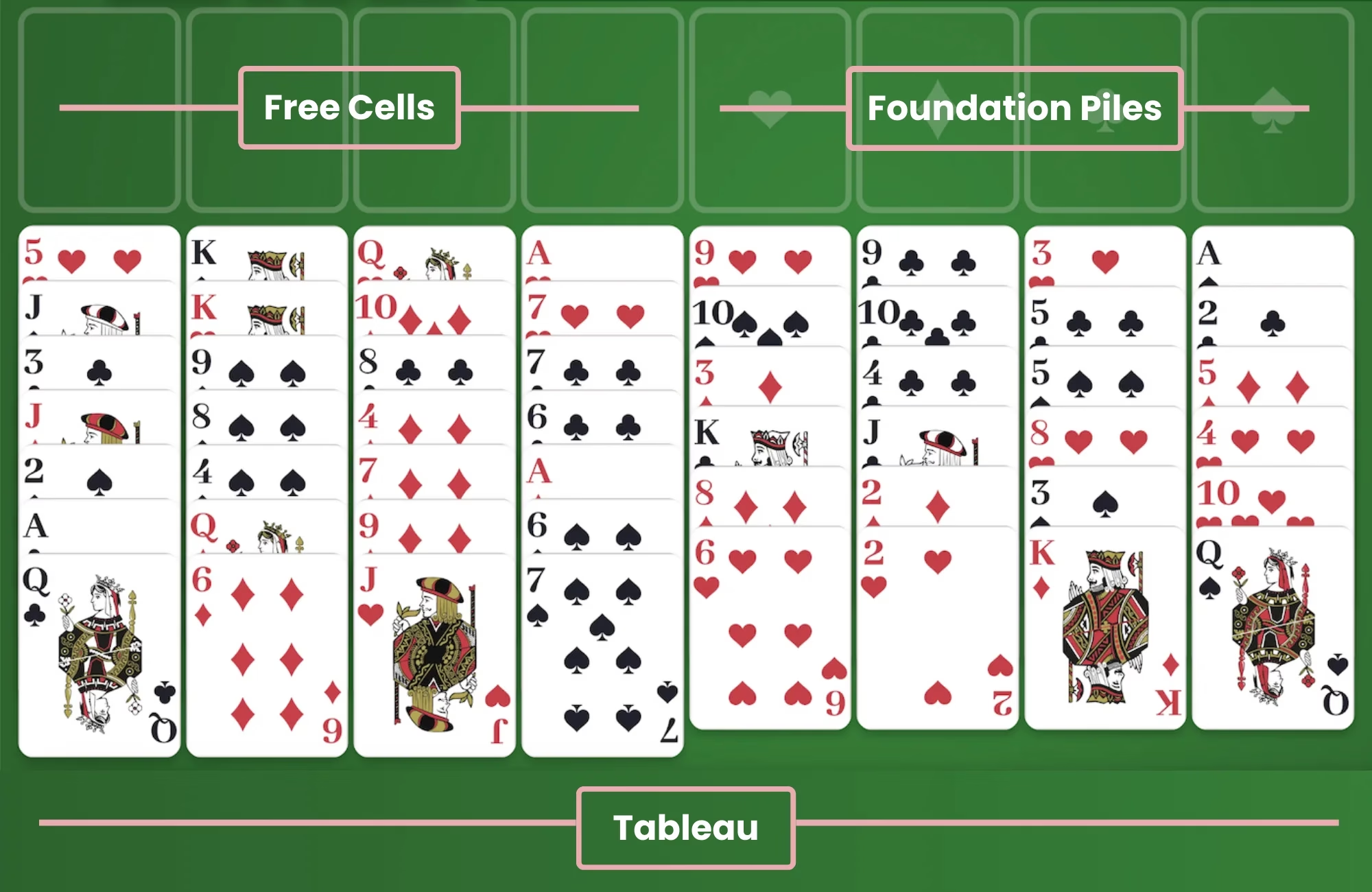
Deal all 52 cards face-up into eight columns to form the tableau. The first four columns get seven cards each and the last four columns get six cards each.
Leave four empty free cells at the top-left of the tableau. These act as temporary storage to help you rearrange cards.
Leave four foundation pile spaces at the top-right of the tableau. As you uncover the cards you need, build each pile up from Ace to King by suit.
How to Play FreeCell
FreeCell is all about planning ahead to figure out how to uncover needed cards and move them to the foundation piles. You do so by following these rules during gameplay:
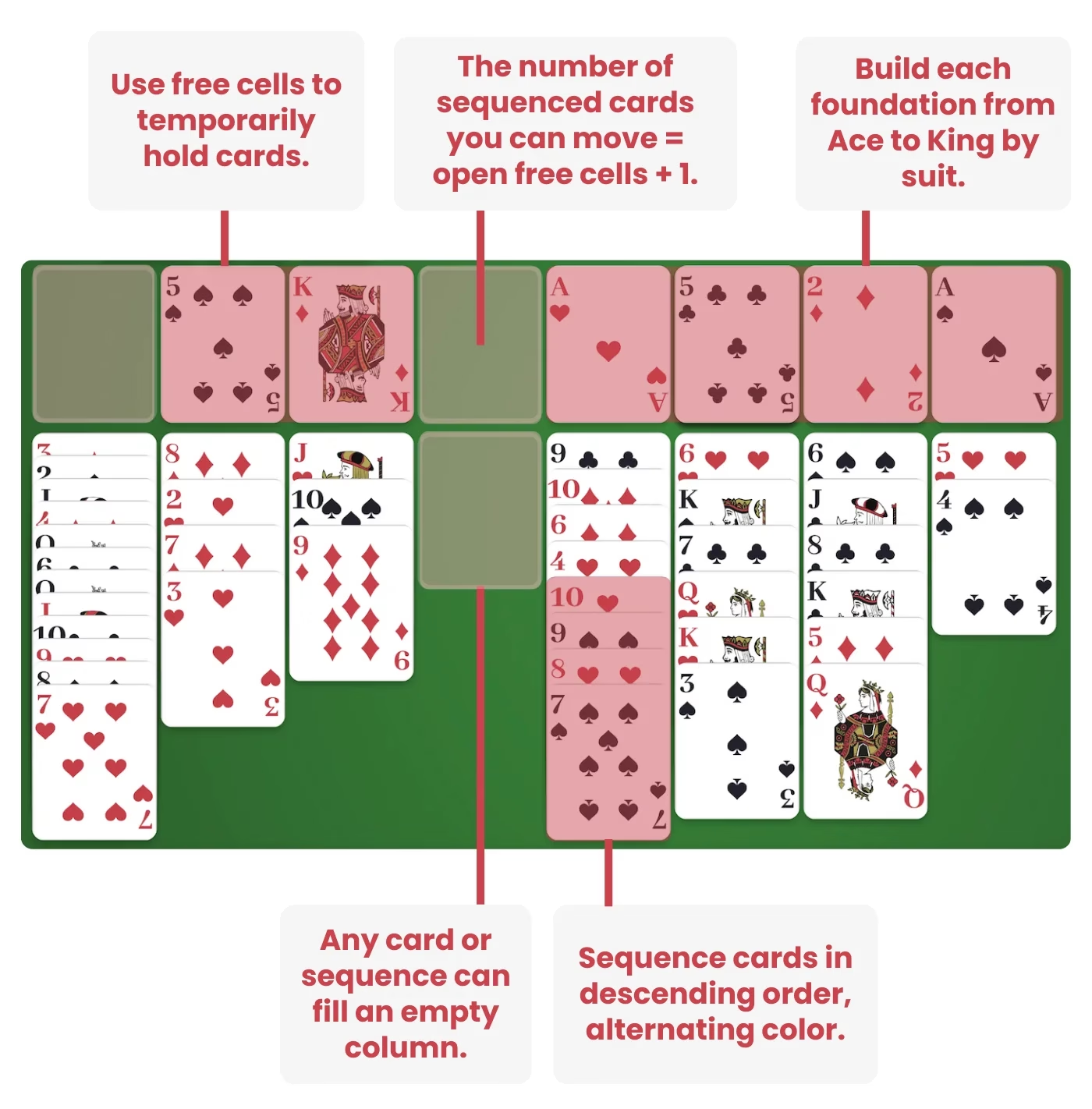
Create sequences in descending order, opposite color. So a red 7♥ could be moved onto a black 8♠ or 8♣.
Move Aces to the foundation piles as soon as they’re available and continue to build foundation piles separated by suit and ascending in rank (A, 2, 3, 4, 5, 6, 7, 8, 9, 10, J, Q, K).
Any single card can be placed into an open free cell to temporarily free up other cards.
The number of sequenced cards you can move as a group is equal to the number of empty free cells plus one.
Four empty free cells = move a sequence of up to five cards
Three empty free cells = move a sequence of up to four cards
Two empty free cells = move a sequence of up to three cards
One empty free cell = move a sequence of up to two cards
Zero empty free cells = move one card at a time
Empty columns can be filled with any card or sequenceof cards, as long as the entire sequence doesn’t exceed the number of cards you’re allowed to move based on the empty cells.
An empty column doubles how many cards you can move at once, as long as you’re not moving the sequence into the empty column. So if you have three free cells and an empty column, you’ll be able to move a sequence of up to 8. This is known as a supermove.
When you complete all four foundation piles, you win the FreeCell game, but if you run out of moves before then, the game is over.
Common Beginner Mistakes
Using all free cells too early, which limits movement
Not planning steps ahead, leading to dead ends
Moving cards to the foundation too fast, which can trap other cards in the tableau
FreeCell Strategies to Start Your Winning Streak
Because all cards are visible from the start of the game, FreeCell rewards careful planning. In addition to understanding FreeCell rules, it’s important to keep these FreeCell strategies in mind to improve your win rate.
Locate the Aces and 2s before making your first move. Early moves should focus on freeing these cards so you can start building the foundation piles.
Avoid filling all the free cells if possible. Filling all four limits your ability to move sequences. Try to keep at least one free cell open if possible so that you’re able to maneuver cards within the tableau.
Always have a plan for moving cards out of free cells. Before placing a card in a free cell, understand whether it’s going back in the tableau or in a foundation pile, and how soon.
Beware of building long sequences that block key cards. It’s tempting to create long sequences, but if they are built on top of low ranking cards, you may have difficulty freeing cards you need for the foundation.
Create empty columns to move longer sequences. Empty tableau columns double the number of sequenced cards you can move, which is a huge advantage when trying to free up buried cards in the tableau.
Start empty columns with higher-ranked cards. Filling empty columns with higher cards gives you more flexibility to build descending sequences underneath them.
Don’t rush cards to the foundation piles. Moving cards to the foundation too quickly can hurt your options in the tableau. Be mindful of which cards you’ll still need to complete sequences before committing them to the foundations.
Play FreeCell on SolitaireStreak
Ready to test your FreeCell skills? Play online for free on SolitaireStreak. Customize your display settings, track your stats, and challenge yourself to improve with every game. We also offer other Solitaire card games including Pyramid Solitaire, Spider Solitaire, and TriPeaks.